HIST 223 Medieval Europe: History Illuminated

Historical artifacts from the Middle Ages. Vivid, colorful, and illuminating the past. Here we analyze objects, artifacts, monuments, relics, and material culture as a response to the numerous myths that circulate 'fake news' about the Middle Ages--from their belief in the flat earth (fake!) to the female lock-n-key chastity belts (fake!). In addition, this site will highlight medieval films in all their attempted history (for better or worse). Let's get medieval.

Sacred Geometry: Charlemagne's Aachen Cathedral

Image result for aachen cathedral octagon
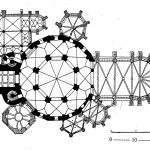
There is an old saying, many of those who read this have probably heard, that is, words have power. The intention of this saying or proverb, if you will, is to cause a moment of pause prior to speaking. This encourages people to think about the effects their words can cause. A similar thought came to mind when looking at Charlemagne's Aachen Cathedral. The idea that numbers have power. The first thing that struck me about this church is the use of an octagon in the central room. This is drastically different than the design of halls for feasting during this period, which better represent the long naves that Cathedrals traditionally have for their central rooms. However there does seem to be significance to the geometry of Aachen Cathedral.


Image result for aachen cathedral planResearch shows that the number eight (8) is used within Christian tradition to relate to the resurrection of the Christ Jesus. Therefore this number is the number to represent the full cycle of God's plan. Although the number seven (7) is usually thought of as the holy number because of the completion of Creation and the Sabbath being on the seventh day, the number eight is the next step. Research also shows that this was a common practice, specifically for the design of baptisteries. The use of eight sides in a baptistery is very interesting because within Christianity it is believed that professing Jesus as Lord and following that with baptism is the process of rebirth. So the question is, was this intended by Charlemagne and his architects? Historians argue that it was intentional. That the knowledge of eight symbolizing the resurrection of Christ Jesus was used to possibly even show the place on earth for spiritual renewal or rebirth for humans. This would suggest a closeness to God through a physical presence within the octagonal structure. Which leaves me with one question for the readers. Knowing that many monasteries were built upon hilltops for physical representation and a spiritual closeness to God, would Charlemagne's use of an octagon in the Aachen Cathedral provide the same effect?


Sources:
"Aachen Cathedral." Wikipedia, Sep. 6, 2016. https://en.wikipedia.org/wiki/Aachen_Cathedral

"Numbers and Their Meanings." crystalinks.com, 2004.  http://www.crystalinks.com/numerology2.html

"The Sabbath Day, Sunday and the Eighth Day." Saint Spyridon Greek Orthodox Church, Mar. 30, 2013. http://www.stspyridons.org/the-sabbath-day-sunday-and-the-eighth-day/

By Unknown at September 14, 2016 5 comments:
Email ThisBlogThis!Share to XShare to FacebookShare to Pinterest

Close Enounters of the Ecclesiastical Kind

To date the most boring paper I have ever written involved framing the Venerable Bede's Ecclesiastical History of England as an early form of propaganda. Reading the work of a medieval monk is not the most interesting task, but I don't blame Bede for the dullness of my writing. Reflecting on the event my 'thesis' was a stretch at best. I thought it made me sound intelligent (it didn't). 

The paper has since been lost. 

So when Bede was mentioned in Medieval History it was like revisiting an acquaintance who you only remember vaguely. I was inspired to revisit The Ecclesiastical History.

An image of a copy of Ecclesiastical History held at the British Library
https://www.bl.uk/collection-items/bedes-ecclesiastical-history

Regardless of my personal feelings on Bede his contribution to history is undeniable. He published many works, but I find The Ecclesiastical History of the English People, or more formally Historia ecclesiastica gentis Anglorum has the most meat. Created in 731 The Ecclesiastical History, or the EH (for the purposes of this blog) covers the conversion of the English people to Christianity. Bede's account begins with the invasion of Julius Caesar and spans into the conversion the Anglo-Saxons across the kingdoms of Britain. Bede lived a monastic life in which he published the EH and other works. The British Library considers the EH as "...the chief source of information about English history from the arrival of St Augustine in Kent in 597 until 731" (https://www.bl.uk/collection-items/bedes-ecclesiastical-history) and the Bennett textbook mentions that the EH is, "...historically reliable" (Bennett 46). The lasting nature of the work speaks to Bede's intelligence and careful research. The copy of the EH presented in this blog is not a 'first edition', but an edition produced after Bede's death and one of several copies in the British Library. 

All that said, why should we care about a document I once wrote a so-called snooze worthy essay about? 

The EC is important to us, Medievalists, because it carefully traces roots of Christianity in England and the transitions that occurred as a result. The EH even gives some insight into the 'medieval experience' although most of those experiences involve the lives of saints. On top of that the diligent documentation and historical accuracy of Bede's work should instill doubt in the strongest believers in the the myth of the dark ages .

So thank you, Bede, for The Ecclesiastical History and for giving us insight into the lives of your contemporaries. May I never again attempt to write a paper on your admirable works. 

Sources 

"Bede's Ecclesiastical History - The British Library Shop." The British Library. The British Library, 22 Dec. 2014. Web. 12 Sept. 2016.

Butler, Judith M. Medieval Europe: A Short History. 11th ed. New York: McGraw-Hill, 2011. Print.
By Unknown at September 12, 2016 3 comments:
Email ThisBlogThis!Share to XShare to FacebookShare to Pinterest

Illuminating the Darkness

The Book of Kells is a beautifully illuminated manuscript of the four gospels created in the 800s. According to the Oscar-nominated animated movie The Secret of Kells, it is also "the book that turned darkness into light."  The Secret of Kells follows a young monk named Brendan as he tries to help a famous illuminator, Brother Aiden, finish the Book of Kells while Vikings invade Ireland.  This movie combines history and fantasy to tell a compelling story of bravery, the combination of Catholicism and Celtic Mythology, and the importance of cultural and religious objects.

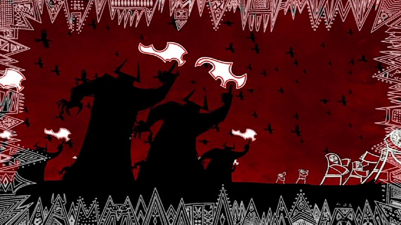
The Secret of Kells draws on historical facts to serve as the backbone of its story.  The abbey of Kells, where the events take place, was a real monastery in Ireland.  Though in the movie the Vikings, or "Northmen," are portrayed demonic figures, more monster than men, Viking invasions did happen, beginning in the late 700s, and monasteries were a favorite target.  In the movie, the abbey of Kells takes in Brother Aiden and other refugees fleeing from the Northmen, which the real abbey also historically did.  Brother Aiden escapes with from a monastery in Iona, where Vikings were pillaging, to finish it in the Kells, which is the most prevalent theory among scholars on how the Book of Kells was made.  The scenery in The Secret of Kells was based on history; the beehive huts used by the monks and the abbey of Kells mirror the real buildings found in Ireland. Brother Aiden's cat, Pangur Bán, is also a historical reference; in the 800s, a Irish monk in Reichenau Abbey wrote a little poem about his cat, Pangur Bán, in the margins of a manuscript.  Since the creation of the Book of Kells is shrouded in mystery, the creators of the movie had to add their own flair to history; the specific story the movie relates never happened.  However, they did use historical facts to provide a basis for their narrative.


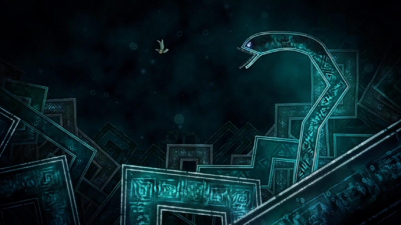
While The Secret of Kells incorporates historical elements to set up the story, it also uses fantasy to build on the narrative and demonstrate the mixing of Catholicism and Celtic Mythology.  In the enchanted forest, Brendan befriends a fairy, Aisling, and battles the Dark One, Crom Cruach.  In Irish writing, an aisling is a poem about a dream where Spring personified helps the dreamer.  Crom Cruach was a pagan deity worshipped before Christianity came to Ireland, and blood sacrifice was probably included in rituals dedicated to him.  Paganism and Catholicism live side-by-side in Brendan's world, which reflects the religion and culture of Ireland in the 800s.  Catholic monks would  try to assimilate pagan beliefs with their own, which Pope Gregory I advised.  Pagan festivals would become church holy days and temples created for pagan deities would be used to conduct Mass.  The movie is not animated realistically; instead, it is flat and intricate, which mimics the illuminations in the Book of Kells. The Book in the movie is given almost divine status; whoever sees it has an awestruck expression, the monks protect it at all costs, and the pages shine with light.  This treatment of the book could represent the importance of knowledge, faith, and the unique Irish culture.  While the fantastical elements in the movie may not be realistic, they do illuminate what life may have been like in the 800s.
 

The Secret of Kells utilizes both history and fantasy to relate Brendan's journey to finish the Book of Kells.  While not always historically accurate, it provides a look into what it must have felt like to live in the 800s in Ireland, where Catholicism and Paganism blended together, Vikings attacks were a feared danger, and an exquisitely illuminated book could create a lasting cultural impact.


Sources:
Bennet, Judith M. Medieval Europe: A Short History. 11th ed. New York: McGraw-Hill, 2011. Print.

Orizaga, Rhiannon Y. "The Secret of the Kells." Latest Films. Mnemonic Productions, n.d. Web. 11 Sept. 2016. <http://www.filmstory.org/films/27>. 

"The Book of Kells." Book of Kells. Library of Trinity College Dublin, 10 June 2016. Web. 11 Sept. 2016. <https://www.tcd.ie/Library/manuscripts/book-of-kells.php>. 

By Erin Benedict at September 11, 2016 5 comments:
Email ThisBlogThis!Share to XShare to FacebookShare to Pinterest

Its Raining Roses, Hallelujah

St. Elizabeth, princess of Hungary


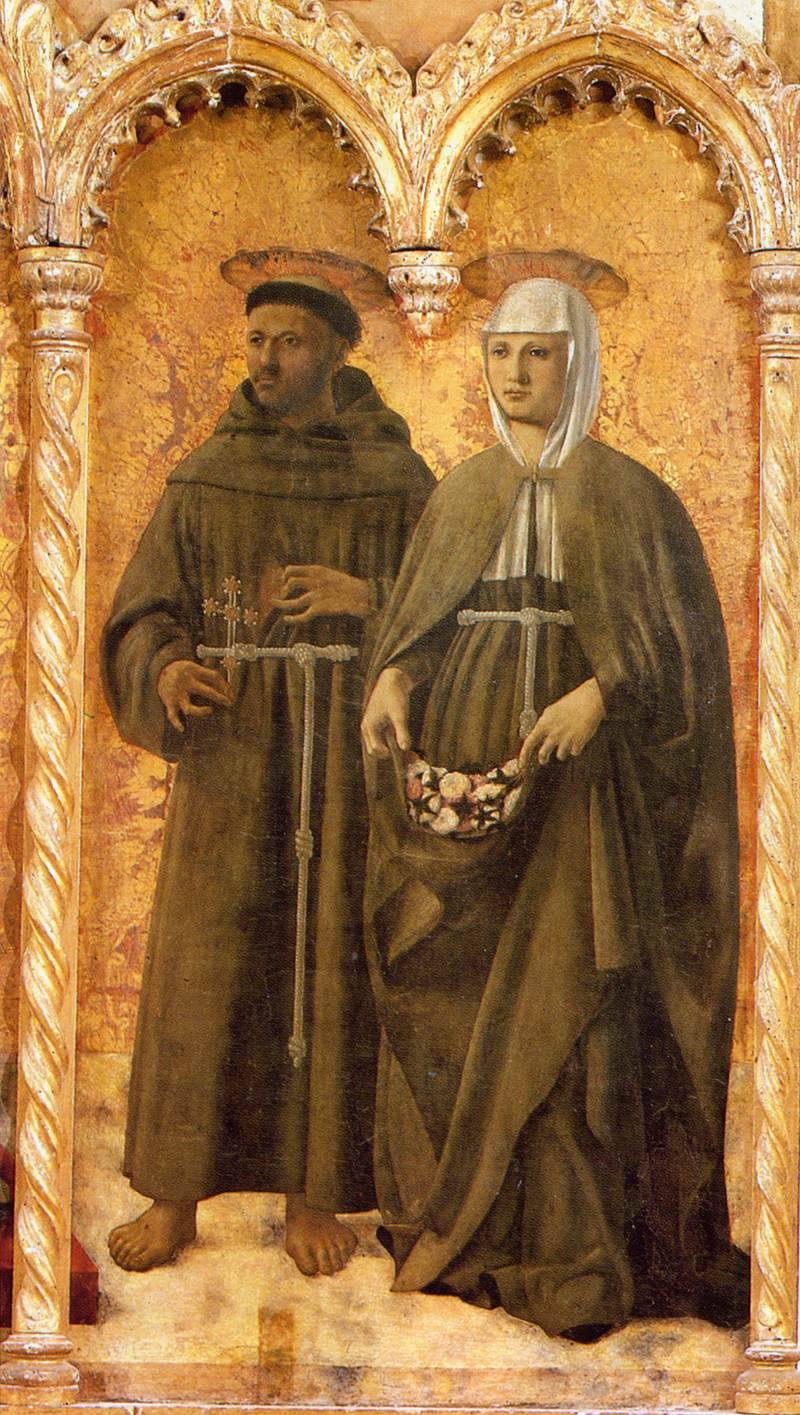
In the paining above St. Elizabeth is bathing a leper or beggar. It is located in her cathedral in Košice, Slovakia and was painted c. 1500. She is often shown with the color red and roses in her apron, like in the painting below, by Piero Della Francesca c. 1460. In this painting she is also pictured with a Fransician friar, most likely her spirital advisor Caesarius of Speier. With the friars' help she founded a monestary in Eisenach and made clothes and provided shelter for the poor. After her husbands death, she became a nun and built a hospital to help the poor even further. 

shhh I know its not red but it has the roses
The miracle St. Elizabeth is most well known for was her Miracle of Roses, which is why shes pictured with them in many paintings of her. When she first got married she began to smuggle bread in her dress for the poor. There were accusations of her stealing treasure from her husband, so he confronted her about it. When he did, a vision of white and red roses fell around her, as the bread had turned into them. Her husband decided she was doing God's work and supported her in her charity to the poor.

After she died at the age of 24, there were miracles of healing being reported at the hospital she built. She was given quick canonization and is now the patron saint of services, tertiaries, widows, and young brides.


Works Cited
Bihl, Michael. "St. Elizabeth of Hungary." The Catholic Encyclopedia. Vol. 5. New York: Robert
Appleton Company,
 1909. 9 Sept. 2016<http://www.newadvent.org/cathen/05389a.htm>.
Online, Catholic. "St. Elizabeth of Hungary - Saints & Angels - Catholic Online." Catholic Online. N.p., n.d. Web. 09 Sept. 2016. <http://www.catholic.org/saints/saint.php?saint_id=45>.
Zaidan, Henry. "Saint Elizabeth of Hungary, 33 Works - RELIGIOUS ART - Paintings from the Bible by the Old Masters, with Footnotes, 18." Mythology:. N.p., 09 Sept. 2016. Web. 09 Sept. 2016. <http://painting-mythology.blogspot.com/2016/05/saint-elizabeth-of-hungary-33-works.html>.


By Morgan Lamkin at September 09, 2016 5 comments:
Email ThisBlogThis!Share to XShare to FacebookShare to Pinterest

The Ornamental Manuscript


St. John from the Book of Kells

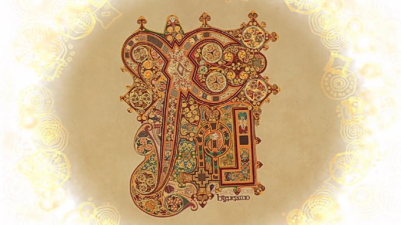
The Book of Kells, produced around the year 800 BCE, was a manuscript that contained the four Gospels as well as other customary additions such as the cannon tables. The Gospels were in Latin and were based off of the Vulgate text that St. Jerome wrote. Much of its popularity derives from the extravagant artistry and decoration contained in the book. The incredible work resides in Trinity College Library, in Dublin.

'Chi Rho' - the most famous page in the Book


There is controversy as to where the Book was produced because it combines Irish and Anglo-Saxon styles. This means that it could be from a number of places including, Ireland, Scotland, or Northumbria (now northern England). Around the time the Book was written, a viking raid moved the book to Kells, Ireland. In the 11th century, the book lost its cover (which most likely included gold and gems) because it was stolen. Since then, no harm has come to the book and it has been well preserved.

Sources:


Bennett, Judith M. Medieval Europe. 11th ed. New York: McGraw-Hill, 2011. Print.
 
Snell, Melissa. "The Book of Kells." About.com. N.p., n.d. Web. 9 Sept. 2016.

Spangenberg, Lisa. "XPI Autem Generatio: The Book of Kells and the Chi-Rho Page." Celtic Studies Resources. N.p., 25 Dec. 2010. Web. 9 Sept. 2016. 

"The Book of Kells." Trinity College Dublin. N.p., n.d. Web. 9 Sept. 2016. 


By Unknown at September 09, 2016 1 comment:
Email ThisBlogThis!Share to XShare to FacebookShare to Pinterest

Wergeld

Near the end of the Roman Empire there was a tribe referred to as Burgundians.  The Burgundians followed a set of laws and codes referred to as The Burgundian Code, these laws covered many topics from getting a divorce, kidnapping, murder, and maiming of other Freemen and Romans.
Most of these laws would require that the offender pay a certain price or fine to the victim or the victims family, and the higher up in the social class the victim was,the higher the fine would be as well.


These fines were referred to as wergeld. You would witness many freeman storing away stashes of solidi (revenue used at the time) to be able to pay off wergeld. Another main use of wergeld was to prevent family feuds from ensuing, why fight to the death over a dead horse when you can just pay for it? I consider the concept of wergeld interesting due to the fact of everything seemed to have a price and its place in society all the way from the maiming of an arm to the stubbing of a toe. This concept is also carried out today in a certain fashion by requiring certain offenders to pay bail to be released from holding.


Marc. "The Burgundian Code - Outline." Burgundians in the Mist:. N.p., 23 July 2010. Web. 07 Sept. 2016.


Duhaime, Lloyd. "Burgundian Code (500)." Duhaime.org. N.p., 13 Sept. 2008. Web. 07 Sept. 2016

Drew, K., The Burgundian Code (Philadelphia: University of Pennsylvania Press, 1972)


.McKitterick, R. (editor), The New Cambridge Medieval History (Cambridge: Cambridge University Press, 1995).
By Unknown at September 07, 2016 3 comments:
Email ThisBlogThis!Share to XShare to FacebookShare to Pinterest
Newer Posts Older Posts Home
Subscribe to: Posts (Atom)

Medieval University

Medieval University

Italy, 1400

Italy, 1400

900s, Jewelled crown

900s, Jewelled crown

Blog Archive

  • ▼  2019 (144)
    • ▼  Dec 1 - Dec 8 (1)
      • Black Death (2010) Film Review
    • ►  Nov 24 - Dec 1 (3)
    • ►  Nov 17 - Nov 24 (1)
    • ►  Nov 10 - Nov 17 (7)
    • ►  Nov 3 - Nov 10 (1)
    • ►  Oct 27 - Nov 3 (30)
    • ►  Oct 20 - Oct 27 (6)
    • ►  Oct 13 - Oct 20 (33)
    • ►  Oct 6 - Oct 13 (3)
    • ►  Sep 29 - Oct 6 (11)
    • ►  Sep 8 - Sep 15 (43)
    • ►  Sep 1 - Sep 8 (5)
  • ►  2018 (19)
    • ►  Dec 2 - Dec 9 (2)
    • ►  Nov 18 - Nov 25 (2)
    • ►  Oct 14 - Oct 21 (2)
    • ►  Oct 7 - Oct 14 (1)
    • ►  Sep 30 - Oct 7 (1)
    • ►  Sep 23 - Sep 30 (3)
    • ►  Sep 16 - Sep 23 (1)
    • ►  Sep 9 - Sep 16 (7)
  • ►  2017 (34)
    • ►  Dec 3 - Dec 10 (2)
    • ►  Nov 19 - Nov 26 (2)
    • ►  Nov 5 - Nov 12 (2)
    • ►  Oct 22 - Oct 29 (3)
    • ►  Oct 15 - Oct 22 (2)
    • ►  Oct 8 - Oct 15 (2)
    • ►  Oct 1 - Oct 8 (4)
    • ►  Sep 24 - Oct 1 (4)
    • ►  Sep 17 - Sep 24 (1)
    • ►  Sep 10 - Sep 17 (5)
    • ►  Sep 3 - Sep 10 (7)
  • ►  2016 (27)
    • ►  Dec 4 - Dec 11 (3)
    • ►  Nov 27 - Dec 4 (4)
    • ►  Nov 20 - Nov 27 (1)
    • ►  Nov 13 - Nov 20 (2)
    • ►  Nov 6 - Nov 13 (1)
    • ►  Oct 30 - Nov 6 (1)
    • ►  Oct 9 - Oct 16 (1)
    • ►  Oct 2 - Oct 9 (3)
    • ►  Sep 25 - Oct 2 (1)
    • ►  Sep 11 - Sep 18 (5)
    • ►  Sep 4 - Sep 11 (3)
    • ►  Aug 28 - Sep 4 (2)
  • ►  2015 (39)
    • ►  Nov 29 - Dec 6 (5)
    • ►  Nov 22 - Nov 29 (4)
    • ►  Nov 15 - Nov 22 (3)
    • ►  Nov 8 - Nov 15 (2)
    • ►  Nov 1 - Nov 8 (2)
    • ►  Oct 25 - Nov 1 (1)
    • ►  Oct 18 - Oct 25 (1)
    • ►  Oct 11 - Oct 18 (4)
    • ►  Oct 4 - Oct 11 (6)
    • ►  Sep 27 - Oct 4 (2)
    • ►  Sep 20 - Sep 27 (2)
    • ►  Sep 13 - Sep 20 (1)
    • ►  Sep 6 - Sep 13 (3)
    • ►  Aug 30 - Sep 6 (2)
    • ►  Aug 23 - Aug 30 (1)
  • ►  2014 (33)
    • ►  Nov 30 - Dec 7 (7)
    • ►  Nov 23 - Nov 30 (2)
    • ►  Nov 9 - Nov 16 (1)
    • ►  Nov 2 - Nov 9 (3)
    • ►  Oct 26 - Nov 2 (2)
    • ►  Oct 19 - Oct 26 (2)
    • ►  Oct 12 - Oct 19 (3)
    • ►  Oct 5 - Oct 12 (2)
    • ►  Sep 28 - Oct 5 (4)
    • ►  Sep 21 - Sep 28 (1)
    • ►  Sep 14 - Sep 21 (1)
    • ►  Sep 7 - Sep 14 (2)
    • ►  Aug 31 - Sep 7 (2)
    • ►  Jul 20 - Jul 27 (1)

Popular Posts

  • The Grindstone
  • Medieval Fine Cakes
  • With the Horse Collar Comes Productivity
  • An Uncover Squire-A Knight's Tale
  • Not One, Not Two, But THREE Field Crop Rotation

Featured Post

Get Medieval: Write in Your Books

Will your class coursepacket look like this? As we start our first weeks together, and for some of you, your first week of ...

Search This Blog

Copyright HIST 223 authors. Picture Window theme. Powered by Blogger.