Domesday Book


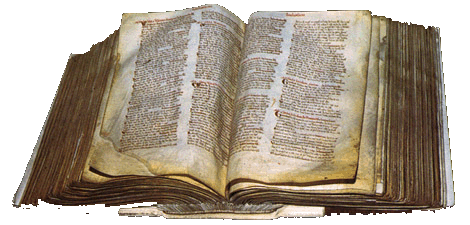
Image result for UK national archieves domesday bookThe Domesday Book is a type of census commissioned and collected during the late eleventh century by King William I, William the Conqueror. This is Europe's earliest census record. It contains details about livestock and land ownerships throughout Britain at the time of King William I's rule. This census was completed in just nine months after its commission in 1086.Though it is said to be a census of all of Britain many places seem to be left out due to size, or private ownership such as London, Winchester, and County Durham. Other's were not yet conquered like Northumberland, Westmorland and Cumberland. Some others have no explanation. There are actually two volumes of the Domesday Book, Great Domesday and Little Domesday. Great Domesday was written first and Little Domesday was written later, but is more comprehensive.

The Domesday Book was created with parchment. Parchment is made from animal skins. To complete the Domesday Book, between 500 and 800 sheep were used.

Many question the motivation of William I's motivation to call for such a comprehensive census. Some believe it was a display of the strength of his rule. Others argue that is was for economic reasons. Some suggest that he wanted to keep track of what was owed to him by the people he redistributed land to in his conquering. Some others still guess that is could have been a preparation for ware against the Danes and Norway. This would provide him with accurate statistics of Britain resources he could call upon should war occur.

Image result for UK national archieves domesday bookThe Domesday book has a very ominous ring to it despite the actual content of the book. This name occurred because of the all encompassing nature of the book and initial commentary on its observing of all the livestock, people and land in Britain that eerily sounded like end times scripture in the Christian Bible. This book has been used throughout the centuries in Britain as a source of legal justification and genealogy research along with an understanding of the workings of the feudal system at the time. The last known use for legal land ownership reasons was in the 1960's. Despite its obvious usefulness, it is full of holes in representation and human errors. This book is truly a monument to the abilities and resources of King William I and will always provide us a glimpse into the history of Britain.

References:

             Newman, Simon. "The Domesday Book." The Finer Times: War, Crime and History Resource. N.p., n.d. Web. 01 Oct. 2016. <http://www.thefinertimes.com/Middle-Ages/the-domesday-book.html>.  Domesday Book

Image:
These images are of the Domesday Book. These images are taken from the National Archives, Kew, London. Image of Domesday Book

A Festival of Fallacy

There is a time each year when my true self is revealed. I break out the drinking horn and the elf ears and travel back to a time long before our own. That time is vaguely medieval and the place is the Kansas City Renaissance Festival. Yes, it is true that renaissance is in the name, but the festival is truly an amalgamation of medieval, renaissance, and modern day elements.


At the entrance to the festival. See 'medieval' structures in background. The photographer is my mom. (Thanks, mom!) 
A trip to the renaissance festival is an interesting study from a the perspective of a medieval historian because it incorporates elements of both fact and fantasy. Truly, the facts are dubious, but amusing to examine none-the-less.  

The festival includes shopping, eating, atmosphere, and live performances. Each year there is a bird show that includes trained hawks! The hawks don't do any hunting at the festival, but if that isn't an appropriate tribute to the middle ages then I don't know what is.  

My favorite show and the only way to end a day at the festival, in my opinion, is with a joust to the death. In a traditional battle of good versus evil two knights square off. One knight fights for the honor of the king the other fights because he is...evil? But in this seemingly simple character development one can draw connections to Song of Roland. As in the song one character is good and others are bad without much motivation. Perhaps the writers of the joust are more medieval than they know. Ultimately, good triumphs over evil but not before lances are shattered and swords clash and a blood pack explodes. Comparing the joust with the description in the Newman text the similarities are few. As Newman says the joust is a duel between two opponents. However, there seemed to be no clear scoring or points system. Several lances were shattered as spectacle, but the ultimate goal was death. The knights in this joust were not playing for sport unlike the tournaments which Newman describes. 

The festival also incorporates the fantasy elements that are often associated with the medieval world. This includes faeries, mermaids, magic, and a unicorn.

Me and an extremely real unicorn. Photo courtesy of mom. 

The festival even includes pop culture references to the middle ages. This includes Robin Hood characters, characters from Vikings, and a replica of the Iron Throne from Game of Thrones.

Savoring a moment on the Iron Throne.  
The renaissance festival is not historically accurate and it draws on overused tropes, but it does not frame the medieval period as the dark ages. It is a celebration of feasting, fighting, and fantasy that, despite inaccuracies, greatly appeals to the modern public (myself especially). This year it was interesting studying the festival with medievalist eyes. 

And there are still a few weekends left for those interested in doing some 'studying' of their own!! 

 http://www.kcrenfest.com/ 

Works cited. 
Newman, Paul B. Daily Life in the Middle Ages. Jefferson, NC: McFarland, 2001. Print.

Beowulf: More than just an Antiquated Story

There's no doubt that Beowulf is an incredible piece of literature. Granted, most long poems or novels about or by white men are considered similarly, because white men have long decided which literature is great. However, Beowulf exhibits unique views into the human condition through the story of an epic hero fighting monsters. Pair that with the incredibly crafted form full of figurative language, and it is easy to see why this poem has a lot of merit. It's probably my favorite story from ancient or medieval literature. 

Beowulf is the longest Old English epic poem that we have recorded. It might also be the most famous epic in Old English. Yet, the poem as it exists today is only written on a single manuscript. This is, of course, excluding the numerous copies that have been translated, reproduced, and republished. On the manuscript, there is no author's name to be found, nor a completion date. Scholars still argue about when it was published. J.R.R. Tolkien, a scholar of the old texts and Old English, places it in the 8th century (Tolkien also has his own translation of the poem, which was published recently). Others say it was written as late as the 11th century. 


The story is set in the 6th century and exhibits many traits of pagan ideology and traditions. However, the story is an amalgamation of paganism and Christianity, and references to both can be seen throughout the poem. The poem also exhibits traits of the oral tradition. Epic poems were often sung or recited as entertainment, because the poetic form was more easily remembered. The poem begins in media res ("into the middle of things"), which suggests this story is one that is being told. So, it is believed that through much retelling throughout the years, it evolved and absorbed Christianity along with the already older pagan ideals. This also means multiple versions of the story have existed, even just through the oral tradition. 

Despite all of this mystery behind it, Beowulf is highly regarded. It exists in numerous translations and in many languages. Plenty of film adaptations of the work have also been made, although mostly poorly. 

As I mentioned before, it isn't just the action that makes this story. Through its strong representations of warrior culture, it can give us a clearer view of some of the ideals of the time. The titular character defeats the monster Grendel, Grendel's mother, and then later a dragon. The battling and culture in the story show us manhood was hinged on being strong and mighty, because the hero Beowulf was the ultimate example of a man. 


However, if you read the story through the women characters it is much easier to critique that very culture. The women characters, Grendel's mother and Hildeburh (a woman in a song one of the character sings), are affected by the warrior culture in horrible ways, as they both lose family members to battles and war. The loss and harrowing sadness they felt is such a jarring shift from the protagonist's efforts to fight and slay. It shows us the story is not a simple one, but it offers multiple perspectives of the life of war. 

Beowulf shows that literature a millennium old can still offer unique and compelling accounts of the human condition. As we read the accounts of these people from the past, and of 'monsters' battling the hero, it also reveals that our humanity cannot be bound by time, and is not something found within our DNA. It connects us to the people of the past, and shows that we aren't much different now. 


________________________________________________________________________________

Sources: 

Acocella, Joan. "Slaying Monsters." The New Yorker. June 2, 2014. Accessed September 15, 2016. http://www.newyorker.com/magazine/2014/06/02/slaying-monsters.


"Beowulf - The British Library Shop." The British Library. 2014. Accessed September 15, 2016. https://www.bl.uk/collection-items/beowulf.


Humans Not Heathens: The History Channel's "Vikings"

This photo provides images of the characters along with major themes. These themes include: strong women in the home and on the battlefield, amalgamation of heathens and Christians, and a power struggle between kings and brothers.

The TV series Vikings, which airs on the History channel, is based on the legendary leader and king of the Northmen, Ragnar Lothbrok. Although the topic and focus of this series may come off as self-explanatory the characters are complex as they follow a deeply entwined story-line during a critical period in the development of the British Isles. The main Vikings are Ragnar, Rollo (brother), Lagertha (first wife), and Bjorn (son).[1] This show is focused on the Viking’s perspective. Therefore, the foreigners are the Anglo-Saxon and Frankish kings Ecbert of Wessex, Aella of Northumbria, and Charles of Frankia. As the series unfolds it follows Ragnar and his family through their raids first into Northumbria, then Wessex, and finally to Paris (Frankia). Through the period of Viking raids, beginning in year 793, the Anglo-Saxon Kingdoms faced not only invasion but occupation.[2]  Through this period there were power struggles between kings and a supernatural battle between the gods of the Northmen and the Christian God. 
Image result for Vikings Ragnar Rollo Lagertha and Bjorn
Characters ordered from right to left: Ragnar, Lagertha, Rollo, and Bjorn
All of these themes and ideas are what the TV series Vikings focuses on. Despite its presence in popular culture and use of dramatization, I argue that Vikings is helpful in gaining a basic understanding of historical figures and the events that happened during the ninth and tenth centuries. This includes major characters in the period and commonly agreed upon themes such as a desire for expansion and religious confusion.

Vikings offers exposure to characters of the past. Although sources do not confirm the proven existence of a King Ragnar Lothbrock, twelfth century sagas do reveal the story of Ragnar. Sagas and folklore accredit Ragnar as the father of many famous and recorded Viking leaders during the ninth century including Bjorn Ironside, Ivar the Boneless, Halfdan Ragnarsson, Sigrud Snake in the Eye, and Ubba. All of these men were leaders of the Great Heathen Army which invaded the Anglo-Saxon kingdoms in 865.[3] According to the sagas, along with being depicted in the series, these men were all the sons of Ragnar Lothbrok. Concerning Ragnar’s foes in the TV series, King Ecbert was an actual king in Wessex. And, as depicted in the series, Ecbert’s son was Aethelwolf. Despite the dramatization within the series concerning his son’s legitimacy, Aetholwolf did have a son named Alfred who eventually became Alfred the Great. The character of Alfred the Great is important to the contribution Vikings makes for a historical understanding and connection to Medieval Europe because the unification of the Anglo-Saxon kingdoms is greatly attributed to the actions of King Alfred the Great.[4] Finally, just as it is depicted in Vikings, King Charles was a king in Frankia. Within the series King Charles is depicted as the grandson of Charlemagne. According to records a grandson and a great-grandson of Charlemagne were both kings in Frankia and they were both named Charles. So, not only do the names line up, but, similar to the role Alfred and his family play, King Charles contributes to the understanding of the importance of Charlemagne in this period. Historical records explain that kings following Charlemagne such as Otto II and Otto III were so concerned with him that Otto II was buried in the same church and Otto III descended into the tomb of Charlemagne.[5] In Vikings, King Charles is haunted as much as he is praised for being the descendant of Charlemagne because of the expectations that bloodline was believed to uphold. Today, we know that Charlemagne played one of the most essential roles in the foundation and organization of northern Europe. Therefore, the constant reminder of King Charles’ ancestry in Vikings adequately portrays the importance and legacy of Charlemagne in this period. 


Image result for Vikings series settlement in wessex
King Ecbert, pictured to the right of Aethelstan, is granting
 Lagertha land for a Northmen's settlement in Wessex.
Next, Vikings shows the concern of more than raiding and pleasure by Ragnar for his purpose in raiding new lands. In the first season Ragnar shows his curiosity in what else is out in the world. This is a major fact that is typically glossed over and ignored in films depicting Vikings. A large amount of popular culture depicts Vikings as solely desiring war and money. However, in their homeland Vikings main economic source was farming and livestock, and due to large estates owned by few people the Northmen faced a shortage in land availability.[6] As a result, along with some other factors, the Northmen went in search for farmland as Ragnar does in Vikings.

Finally, Vikings does contain inadequacies that harm its representation of medieval culture. First, King Ecbert is extremely interested in the Roman artifacts that surround him. In the second season of Vikings King Ecbert uses a monk, Aethelstan, that Ragnar had captured during the first season to transcribe scrolls and translate them from Latin. He makes comments about the “wonders” and “insight” of the Romans. Through King Ecbert’s character the writer for Vikings ignore the argument that many people saw the kingdoms of Europe as a continuation of the Roman Empire not a recession from the Romans’ achievements. In a letter to an Abbot, Charlemagne describes himself no only as king but also as the, “Patrician of the Romans.”[7] This statement by Charlemagne reveals a sense of continuation rather than cessation from the Roman period. Despite this variance, King Ecbert and the monk Aethelstan do reveal a struggle between a full faith in the Christian God and the idea of pagan gods having power and influence in the world. This could be used to show Bennett’s argument about the Irish missionaries that worked within the Anglo-Saxon kingdoms and their lack of forceful repentance from cultural traditions. As a result of the amalgamation of Christianity and cultural traditions a coexistent belief could have been present which King Ecbert and Aethelstan reveal in their characters. 
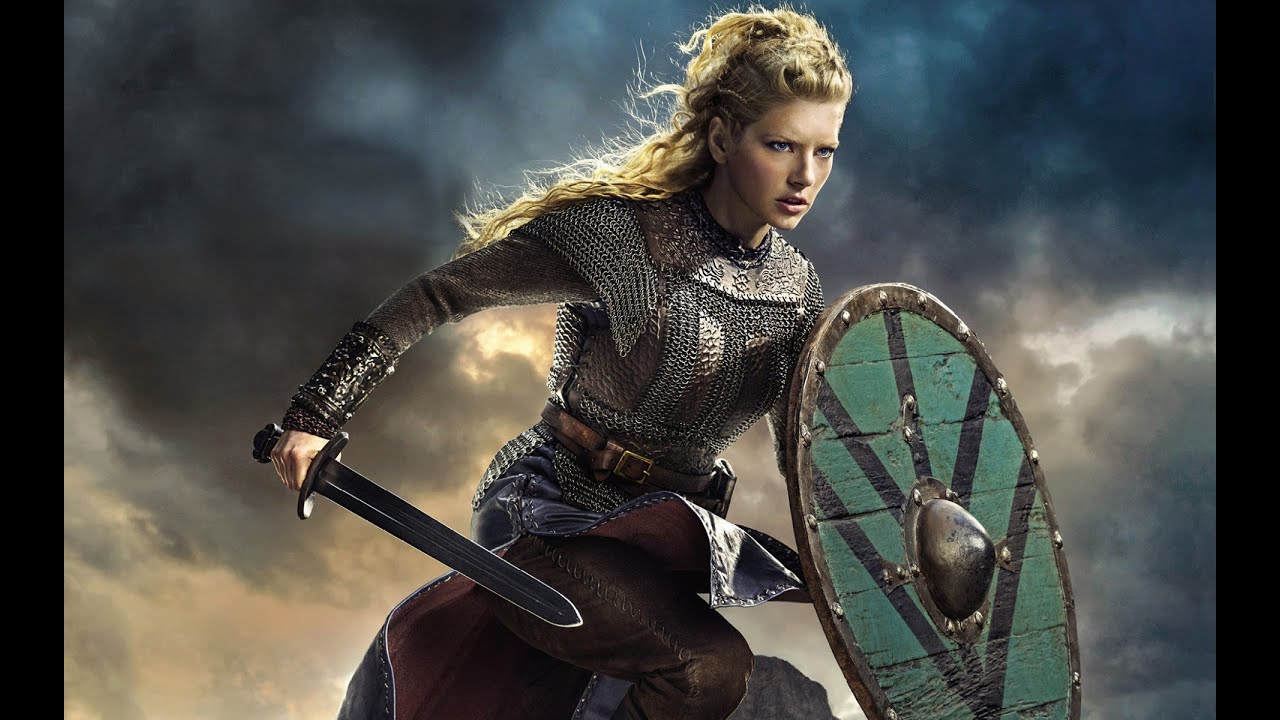
Image result for Vikings lagerthaAnother inaccuracy is the strong presence of shield maidens, or female warriors. In Vikings there are many women shown on the battlefield fighting alongside women and although the sagas and folklore highlight a presence of shield maidens many scholars argue their presence was a rarity. Bennett explains that the society of Northmen was very patriarchal and states that men raided but men and women settled.[8] Therefore, the use of women on the battlefield as a commonality is inadequate but showing their importance in the process of holding and settling the land following a raid is not. As a result, there may not have been shield maidens but many arguments do claim that the women of Viking culture were present and played a major role during the Viking period.                                     

Overall, Vikings may not be chronologically correct, and some of the characters may be based off of sagas from this period rather than historical records but it can reveal the relation of the different rulers in the Anglo-Saxon kingdoms along with the importance of Charlemagne to Frankish royalty. This series also displays that there were push factors, such as a need for more land, along with pull factors, gold, that drew the Northmen to raid the mid-European kingdoms. And finally, despite its inaccuracies, Vikings shows that there could have been a development of coexistent religious beliefs and that there was a role for women within the Northmen’s culture. Although Vikings embellishes and dramatizes some aspects of the early Medieval Anglo-Saxon period, it shows viewers many aspects that spark interest and escape the traditional thought of Vikings as blood thirsty gold seekers.    


[1] Relations are in reference to the individuals’ relationship to Ragnar in the series Vikings. 
[2] Date provided by: Judith M. Bennett, Medieval Europe: A Short History (New York: McGraw Hill Education, 2010), 109.
[3] "Ragnar Lodbrok", Wikipedia, last modified September 8, 2016, https://en.wikipedia.org/wiki/Ragnar_Lodbrok. 
[4] Judith M. Bennett, Medieval Europe: A Short History (New York: McGraw Hill Education, 2010), 112.
[5] Class notes.
[6] Judith M. Bennett, Medieval Europe: A Short History (New York: McGraw Hill Education, 2010), 107.
[7] Charlemagne, Letter to Baugulf, Abbot of Fulda. Course Packet, ed. Shelley Wolbrink (2016): 28-29.
[8] Judith M. Bennett, Medieval Europe: A Short History (New York: McGraw Hill Education, 2010), 109.

Sacred Geometry: Charlemagne's Aachen Cathedral

Image result for aachen cathedral octagon
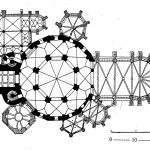
There is an old saying, many of those who read this have probably heard, that is, words have power. The intention of this saying or proverb, if you will, is to cause a moment of pause prior to speaking. This encourages people to think about the effects their words can cause. A similar thought came to mind when looking at Charlemagne's Aachen Cathedral. The idea that numbers have power. The first thing that struck me about this church is the use of an octagon in the central room. This is drastically different than the design of halls for feasting during this period, which better represent the long naves that Cathedrals traditionally have for their central rooms. However there does seem to be significance to the geometry of Aachen Cathedral.


Image result for aachen cathedral planResearch shows that the number eight (8) is used within Christian tradition to relate to the resurrection of the Christ Jesus. Therefore this number is the number to represent the full cycle of God's plan. Although the number seven (7) is usually thought of as the holy number because of the completion of Creation and the Sabbath being on the seventh day, the number eight is the next step. Research also shows that this was a common practice, specifically for the design of baptisteries. The use of eight sides in a baptistery is very interesting because within Christianity it is believed that professing Jesus as Lord and following that with baptism is the process of rebirth. So the question is, was this intended by Charlemagne and his architects? Historians argue that it was intentional. That the knowledge of eight symbolizing the resurrection of Christ Jesus was used to possibly even show the place on earth for spiritual renewal or rebirth for humans. This would suggest a closeness to God through a physical presence within the octagonal structure. Which leaves me with one question for the readers. Knowing that many monasteries were built upon hilltops for physical representation and a spiritual closeness to God, would Charlemagne's use of an octagon in the Aachen Cathedral provide the same effect?


Sources:
"Aachen Cathedral." Wikipedia, Sep. 6, 2016. https://en.wikipedia.org/wiki/Aachen_Cathedral

"Numbers and Their Meanings." crystalinks.com, 2004.  http://www.crystalinks.com/numerology2.html

"The Sabbath Day, Sunday and the Eighth Day." Saint Spyridon Greek Orthodox Church, Mar. 30, 2013. http://www.stspyridons.org/the-sabbath-day-sunday-and-the-eighth-day/

Close Enounters of the Ecclesiastical Kind

To date the most boring paper I have ever written involved framing the Venerable Bede's Ecclesiastical History of England as an early form of propaganda. Reading the work of a medieval monk is not the most interesting task, but I don't blame Bede for the dullness of my writing. Reflecting on the event my 'thesis' was a stretch at best. I thought it made me sound intelligent (it didn't). 

The paper has since been lost. 

So when Bede was mentioned in Medieval History it was like revisiting an acquaintance who you only remember vaguely. I was inspired to revisit The Ecclesiastical History.

An image of a copy of Ecclesiastical History held at the British Library
https://www.bl.uk/collection-items/bedes-ecclesiastical-history

Regardless of my personal feelings on Bede his contribution to history is undeniable. He published many works, but I find The Ecclesiastical History of the English People, or more formally Historia ecclesiastica gentis Anglorum has the most meat. Created in 731 The Ecclesiastical History, or the EH (for the purposes of this blog) covers the conversion of the English people to Christianity. Bede's account begins with the invasion of Julius Caesar and spans into the conversion the Anglo-Saxons across the kingdoms of Britain. Bede lived a monastic life in which he published the EH and other works. The British Library considers the EH as "...the chief source of information about English history from the arrival of St Augustine in Kent in 597 until 731" (https://www.bl.uk/collection-items/bedes-ecclesiastical-history) and the Bennett textbook mentions that the EH is, "...historically reliable" (Bennett 46). The lasting nature of the work speaks to Bede's intelligence and careful research. The copy of the EH presented in this blog is not a 'first edition', but an edition produced after Bede's death and one of several copies in the British Library. 

All that said, why should we care about a document I once wrote a so-called snooze worthy essay about? 

The EC is important to us, Medievalists, because it carefully traces roots of Christianity in England and the transitions that occurred as a result. The EH even gives some insight into the 'medieval experience' although most of those experiences involve the lives of saints. On top of that the diligent documentation and historical accuracy of Bede's work should instill doubt in the strongest believers in the the myth of the dark ages .

So thank you, Bede, for The Ecclesiastical History and for giving us insight into the lives of your contemporaries. May I never again attempt to write a paper on your admirable works. 

Sources 

"Bede's Ecclesiastical History - The British Library Shop." The British Library. The British Library, 22 Dec. 2014. Web. 12 Sept. 2016.

Butler, Judith M. Medieval Europe: A Short History. 11th ed. New York: McGraw-Hill, 2011. Print.

Medieval University

Medieval University

Italy, 1400

Italy, 1400

900s, Jewelled crown

900s, Jewelled crown