Strata Florida Abbey; The Valley of Flowers

In the rural part of Central Wales, near the small village of Pontrhydfendigaid (no clue on how to pronounce this) lies the ruins of an medieval church. In English the Abbey was known by the name "Strata Florida", in welsh it was called Ystrad Fflw or the Valley of Flowers. Despite its name a long history of violence marred this location and defiled the sacred purpose of the Abbey. Although it is unassuming at first glance the ruins of this Cistercian Abbey mark the spot where enormous changes and upheavals happened in British History not limited to the Glyndŵr rising and the chaos of the Protestant Reformation.


Strata Florida was founded by Cistercian Monks in the year 1164 CE, the Abbey's chapel was consecrated much later in the year 1204. The Cistercian Monks at Strata Florida eventually became quite wealthy and influential Ystrad Fflw had arguably become the cultural center of medieval Wales. Among the great works that were produced here were the Brut y Tywysogion (one of the first chronicles of Welsh History written in the Welsh Language) and the ballad of Mabinogion. One of the foremost poets of the middle ages, Dafydd ap Gwilym was known to have lived and compiled his works inside Strata Florida. Strata Florida was so important in the political and cultural spheres of Wales that the Welsh princes, including the famous Llywelyn the Great often held council there to decide the major political issues of the day.


Unfortunately the prosperity and influence of the Cistercian Monastery began to decline following the English conquest of Wales in 1277 CE. Perhaps this is representative of the decline of Welsh culture in general, the confiscation of Welsh lands under English nobles styled "Marcher-Lords" marks the beginning of the gradual Anglicization of Wales. This period marks the beginning of the troubles that the Cistercian Monks of Strata Florida faced during the tail-end of the Middle Ages.


                                                   A 16th century portrait of Henry IV

During the Welsh war of Independence the problems faced by the Abbey grew worse. In 1401 the English King Henry IV and his son lead an army in pillaging Strata Florida, after the monks there were found to be sympathetic to the Welsh rebel leader, Owain Glyndŵr. Following this incident the monks were expelled from the Abbey. Strata Florida was used as an English military base for the remainder of the war. In 1415 following English victory in the Glyndŵr rising the Abbey was returned to the Cistercian Order, though the monks would never truly recover from the devastation incurred upon them during the conflict.


                                                                        Henry VIII


The protestant reformation and the rise of Anglicanism in England would mark the final death of Strata Florida. In the 1540's Henry VIII the founder of Anglicanism assumed direct control over religion in England. As a consequence of this many monasteries including Strata Florida Abbey were plundered and destroyed by English Soldiers, often being converted into manor houses for use of the nobility.

                                                                         Sources: 

        http://www.bbc.co.uk/blogs/waleshistory/2012/07/strata_florida_abbey.html
        
        http://strataflorida.org.uk/

        https://www.historic-uk.com/HistoryUK/HistoryofWales/The-English-conquest-of-Wales/


Are You Worth Your Salt?


In Roman times, salt was highly prized and if one was said to be not "worth their salt," it was considered a high insult. It is also regarded as the first traded commodity (Salt Assocation). Salt was no less valuable in the Middle Ages and contributed to status as well as food preservation.


The mineral was not mined, but obtained through evaporating brine and seawater. Lead salt pans were used for this purpose but would be replaced with iron versions in the eighteenth century. Originally designed in the Roman era, salt pans of the Middle Ages were slightly smaller than the Classical standard and did not have any inscriptions or embellishment on them. Pans were left in the sun and would leave behind salt as the water evaporated. There was money to be made in salt production and "wiches" - saltworks - sprung up throughout England to get into the industry.


Domesday Book records of the salt industry in England are more in-depth than those of any other type of production, demonstrating just how valuable it was (Hull). Worcestershire and Cheshire were two of the largest saltworks cities, followed by Sussex on the southern coast. Middlewich, Nantwich, and Northwich were the major saltworks of Cheshire. Salt was a local affair and the cost of importing it to other cities was great. London later formed its Fraternity of Salters to produce it themselves as only the wealthy could afford it when brought in from other towns.

These saltworks received support from the king and in return were to pay shares of their product to him. Droitwich, a saltworks in Worcestershire, had 300 measures of salt paid to the king by three salt-workers according to the Domesday account. Henry II's marriage to Eleanor of Aquitaine also opened trade between England and France, providing a new market for Biscay salt from the Continent, although it probably did little to reduce the prices attached to it.


The famine that struck Europe in 1315 saw the amount of salt available to the population drop because of a reduced amount of sunlight. Intense rain decreased crop populations and blotted out the sun, making it difficult to dry out salt from seawater. As availability decreased, it made it harder to preserve meats which resulted in even greater food shortage.


Works Cited

"Lead Salt Pans." Salt Association. https://www.saltassociation.co.uk/education/salt-history/roman-times/lead-salt-pans/.

"Life in Towns and Villages." National Archives. http://www.nationalarchives.gov.uk/domesday/world-of-domesday/towns.htm.

Newman, Paul. Daily Life in the Middle Ages. McFarland and Company, 2001.

"Roman Times." Salt Association. https://www.saltassociation.co.uk/education/salt-history/roman-times/.

"Normans and Late Medieval." Salt Association. https://www.saltassociation.co.uk/education/salt-history/normans-late-medieval/.

"Salt-works." Hull Domesday Project. http://www.domesdaybook.net/domesday-book/structure-of-domesday-book/salt-works.

"Using Salt in the Middle Ages." Medievalists.net. http://www.medievalists.net/2016/01/using-salt-in-the-middle-ages/.


Architecture Tools

Many different tools were used in the building and architecture of the 12th century. A compass, not the navigational kind, is an instrument that is used to make a perfect circle. A compass is depicted in the manuscript illustration. In this manuscript illustration God as Architect, it depicts God holding the world and using a compass. It is believed that it was invented by Perdix, nephew of Daedalas who was a famous craftsman. The first version was attaching a string to a peg. It is believed that it was used by the Egyptians and was later seen in the Roman times as it was upgraded. In medieval times it was converted into a legged compass before it became more like the traditional one used today. Siena Cathedral is a great example of where it has been used, in making the large central mosaic, top of arches, and the dome.
Siena Cathedral

Vienna, Nationalbibliothek, God 13th century
The square was used to ensure that everything was at a right angle or 90 degrees. It was also used in measuring to make sure materials were the right size by all dimensions. With building higher and higher it needs to be measured to keep the building straight and from falling over from being unbalanced. The square first came about in the Egyptian times which is known because it was found in one of the royal tombs. Even later the Greeks and Roman were shown to have used this tool. This would later form the modern-day right triangle, even though squares are still used as well. In the Herrad von Landsberg, Horus Delicaram shows how the square is being used as the building is being built up.
Herrad von Landsberg, Hortus Deliciarum 12th century


Work Cited:
God as Architect/Builder/Geometer/Craftsman ( Österreichische Nationalbibliothek): Art in the Christian Tradition, diglib.library.vanderbilt.edu/act-imagelink.pl?RC=55539.
“Just Fun Facts.” Fun and Interesting Site, 1 July 1969, justfunfacts.com/interesting-facts-about-siena-cathedral/.
L. R. Shelby. “Medieval Masons' Tools. II. Compass and Square.” Jstor, 1965, www.jstor.org/stable/pdf/3101076.pdf?refreqid=excelsior%3Ae19cc2c4292061ca098dd0100454ff9f.
SCHOFIELD , JOHN. “The Construction of Medieval and Tudor Houses in London .” Arct, 1991, www.arct.cam.ac.uk/Downloads/chs/vol7/article1.pdf.


Castles Seen in Monty Python And The Holy Grail


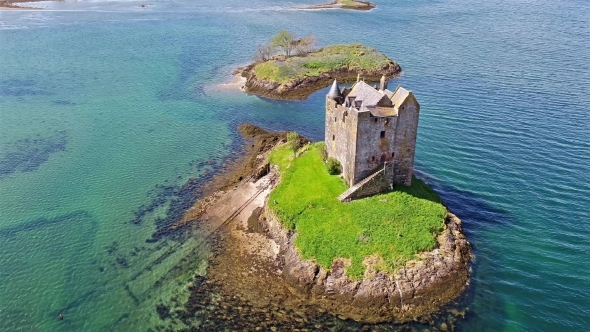
      In the film Monty Python and the Holy Grail we see many different castle locations that the knights visit in their journeys. However, only a couple castles were actually used in the filming of the movie. The two castles that were used were Doune Castle and Castle Stalker. Because of this they had to get a bit creative during filming to create the illusion of multiple locations. Most of the movie was shot in the highlands of Scotland.

Scotland-2016-Aerial-Doune Castle (and Castle keeper's cottage).jpg

     Pictured above is the Doune Castle. This Castle was originally built in the 13th century. Many of the scenes in the film that took place in a castle were shot at this location. For example the scene inside Camelot that portrayed the knights drinking and partying was done here. The use of tight shots was employed to maintain the illusion of various castle locations.

Image result for Castle StalkerThe other castle used was the Castle Stalker. This was only used in the final scene of the film, known as "The castle of Aaarrgghh." Castle Stalker, just like the rest of the film locations is located in Scotland. This Castle was originally built in 1320 as a small fort. Nowadays Castle Stalker is a great tour spot in Scotland.


Sources


Lady and the Unicorn

For sharp eyed viewers of the Harry Potter movies, you might notice that the walls of the Gryffindor common room are covered in a bright red tapestry prominently featuring several women, and unicorns. what viewers may not know, is that it is based on a real set of tapestries from around 1500 called "the Lady and the Unicorn"
The family that commissioned it were from Lyon, France it is not known who exactly designed it, yet it is considered by some to be the Mona Lisa of the medieval era, because of it's complexity and beauty. It consists of 6 panels, each representing the five senses, Taste, Touch, Sight, Sound, Scent, and the sixth sense Desire.
It features many aspects of medieval mythology and symbolism, such as the unicorn, which may have represented courtly love. as well as s Fox, Rabbit, Genet, falcon and Heron which represent nobility, (just to name a few.)
The panels were only recovered in 1814 in Boussac Castle in Creuse and became position of the French Government in 1882
Works Cited
- Delaney, Brigid. “Lady and the Unicorn: Mona Lisa of the Middle Ages Weaves a New Spell.” The Guardian, Guardian News and Media, 13 Feb. 2018, www.theguardian.com/artanddesign/2018/feb/13/lady-and-the-unicorn-mona-lisa-of-the-middle-ages-weaves-a-new-spell. 
“- The ‘Mona Lisa’ of Medieval Art.” Medievalists.net, 14 Apr. 2018, www.medievalists.net/2017/04/mona-lisa-medieval-art/.

A Crusader Hospital

Image result for knights hospitaller symbol

Although the Knights Templar is the most recognized type of knight to exist during the Crusades, they are far from being the only type. The Order of Knights of the Hospital of Saint John of Jerusalem, or the Knights Hospitaller, was a military order whose primary focus was to care for the sick and injured pilgrims traveling to the Holy Land.

In the heart of Jerusalem resides the remnants of a 1,000-year-old hospital building that was constructed by the Knights Hospitaller. The building collapsed in the earthquake of 1457 and was discovered in 2013—13 years after excavation began.  

Spead out over an area of 150,000 square feet, the building's setup is very similar to that of a modern hospital. Wings that were once organized according to medical condition branch off into smaller hallways and patient rooms. The Great Hall areas are characterized by massive pillars and 20-foot ceilings.

The facility is said to have also doubled as an orphanage. In many cases, newborn babies would be dropped off; if a mother had twins, she would deliver one of them to the orphanage. These orphans were very well cared for and raised to become a part of the military order once they were of age.


Works Cited


Medieval University

Medieval University

Italy, 1400

Italy, 1400

900s, Jewelled crown

900s, Jewelled crown