The Wonders of Cinque Terre, Italy

Cinque Terre, Italy is made up of five small towns named Monterosso, Vernazza, Corniglia, Manarola, and Riomaggiore that lie on the Ligurian coastline. The value of this place doesn't come from major landmarks, artworks, or museums. Rather, the value comes from its breathtaking harbors, gorgeous scenery, colorful buildings, medieval surroundings, and the breathtaking views of the Mediterranean Sea. All five cities have something to offer, from the gothic influences of churches in Corniglia and Manarola, Vernazza's castle and beautiful harbor, Monterosso's beach front and fortress built in 1622, the 16th century watch towers and bell towers in Manarola and Monterosso, and the slew of medieval churches and castles in Riomaggiore. You can also see the entirety of the Cinque Terre coast at the Sanctuary of Madonna di Motenero in Riomaggiore, which is one of the best viewpoints in the entire village. No matter what city you're in, there's always something to marvel at.

Traces of these lands can date back to Roman times and served as fishing towns for a long time. Many civilizations vied for this land because of its strategic location along the Mediterranean Sea. The Barbarians, Byzantines, Lombards, and a myriad of feudal families all claimed parts of this land at one point in time before all five cities were eventually taken over by the Republic Of Genoa in 1276. There was also a wall built in the Middle Ages that surrounds the area for fortification purposes. For example, the Torre Aurora, a medieval creation, was made to fend off pirates. Because of the Cinque Terre being far from many other cities, it was nearly impossible to get to by land, only by sea. It took until 1870 for a railroad to be built by the Italian Government for visitors to finally visit the cities. And those visitors get to experience the greatest sights and scenes Europe has to offer.

Works Cited
"Cinque Terre: History." Cinque Terre, Italy, https://cinqueterre.a-turist.com/history.

Packard, Robert. "A Walk in the Cinque Terre." The New York Times, Oct. 6, 1985, https://www.nytimes.com/1985/10/06/travel/a-walk-in-the-cinque-terre.html.

Rogers, Barbara Radcliffe. "Visiting the 5 Towns of the Cinque Terre." Planetware, https://www.planetware.com/italy/cinque-terre-cinqueterre-i-li-cqfv.htm.

Lets Dig Into the History of the Heavy Plough


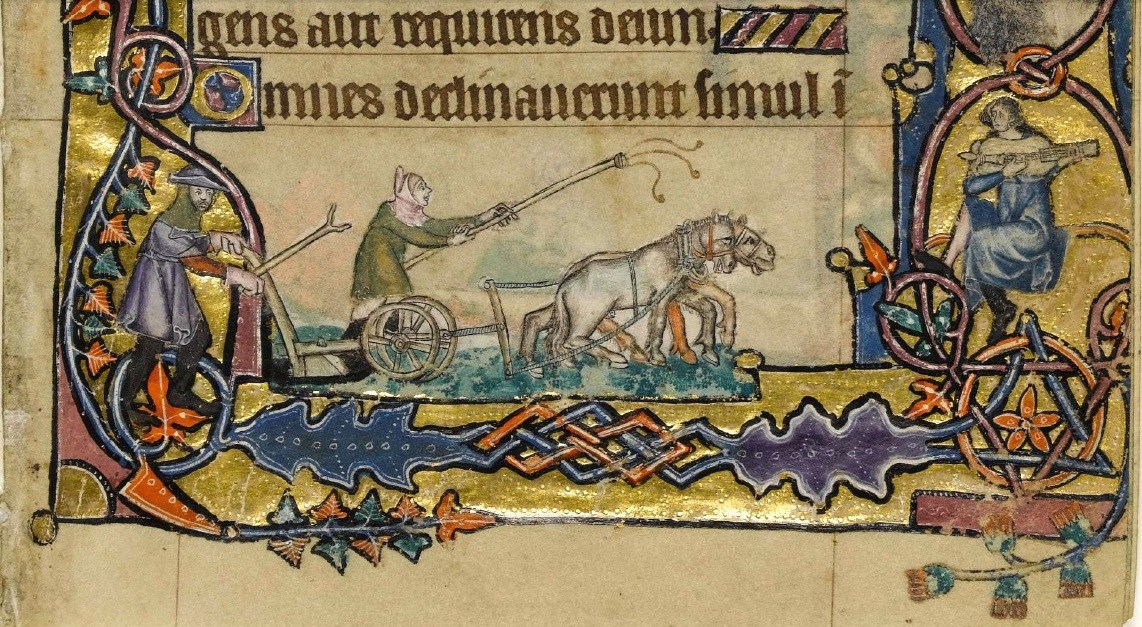
Ah the Heavy Plough, an back saving implement of epic proportions. This implement was controlled by the farmer, and driven by two Horses or Oxen. It enabled the farmer to till and work the soil far faster than they would ever achieve through hand tools. It enabled farmers to create better fields faster than ever known before.


As seen to the right the Plough is composed of a wooden frame with a metal blade used to cut into and part the soil with the V shape helping to push the soil apart and create a ditch used for irrigation and planting. Doing this with a shovel or a similar implement on the same scale would be very difficult. It was this Plough that helped produce more food for the rising populace of Europe

Medieval Nuns


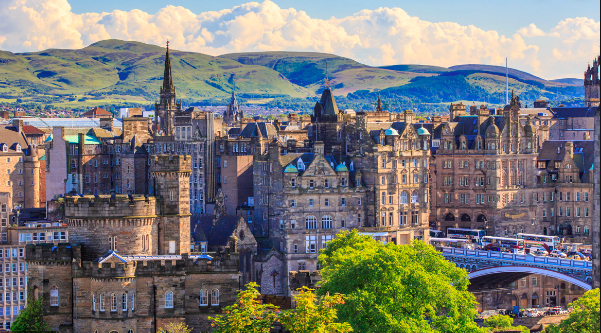
Edinburgh, Scotland is the current capital of Scotland, and is part of the countries 32 council areas. Edinburgh, was constructed a little before the 12th century. The city was originated when a small hill-fort called Dun Eiden was built by the Gododdins. The forts original location of being built is not yet known, but historians believe it was  probably built on Castle Rock. Castle Rock is a volcanic rock structure that sits in the middle of Edinburgh. Along the top of Castle Rock now sits the royal castle that was built during the middle ages under the reign of King Malcolm III. 
The city of Edinburgh can now be looked at historically through the features of old and new town Edinburgh. Old town was built during the middle ages, at a time when the fear of being attacked was constant. Thus making its buildings sit at the top of Castle Rock overlooking the surrounding area. The New Town on the other hand was built later, and spreads out along many different streets and terraces. 
Another part of history in which Edinburgh contributed to the medieval period was with Friars. In Edinburg Friars were some of the first to be founded. They worked for the community and could leave the monastery to preach. In the southern part of Edinburg lived two different types of Friars, Dominican and Augustinian. The Dominican Friars usually dressed in black while the Augustinian dressed in grey.
As time went on a settlement began to grow on the east side of the rock. The settlement was occupied by Edinburgh and Canongate. Both of these old english fortifications or "royal burghs" were allowed to take part in foreign trade. During the years Edinburg became known for its wide scale commerce. Edinburg became especially known for its  making of wool cloth and leather exported from the nearby Port Leith. Cattle and sheep from this area were raised and sold in Cowgate, and other products like cereal and hay were sold at the grass market.
In the year 1296 the English captured the Edinburgh castle and kept control of it until the year 1322. The city of Edinburgh went through constant war between the Scotts and English, and in 1385 the Cathedral of St. Giles Kirk  and the Town Hall were burnt down. Edinburg in 1329 brought forth a charter granting the townspeople certain rights, a sign of the cities growing importance, and by the 15th century Edinburg had turned into the capital of Scotland.


Work Cited
“A BRIEF HISTORY OF EDINBURGH, SCOTLAND.” A History of Edinburgh, http://www.localhistories.org/edinburgh.html.

“Edinburgh's Other History: Walking Tour.” Edinburgh by CIVITATIS, https://www.introducingedinburgh.com/history

Turnbull, Archie Rule, et al. “Edinburgh.” Encyclopædia Britannica, Encyclopædia Britannica, Inc., https://www.britannica.com/place/Edinburgh-Scotland.

The Grindstone


The grindstone is, although a somewhat simple invention, an important advancement made during
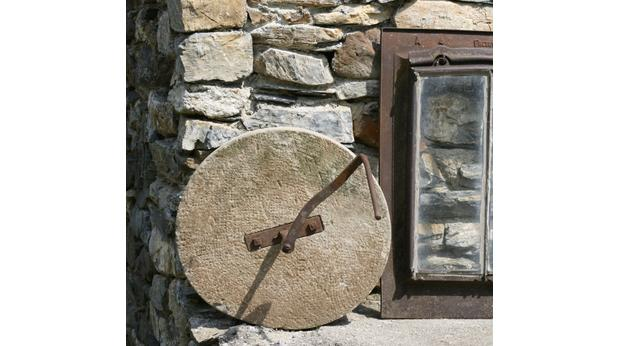
the Middle Ages. A grindstone is a round slab of stone, about a meter in diameter and varying in
width, made of either sandstone, granite, or any hard stone. It is used to sharpen tools such as knives
by turning the stone with the handle or two-handles on the sides and water dripping on it. The water
on the stone helps prevent the stone from overheating as it grinds on the object. Depending on the
design of the grindstone, it would take one or two people to turn the stone, while another person holds
the tool that is being sharpened.

Even though the grindstone was invented around the early 1300s, it has actually been used for quite a long time. The design and use of the grindstone have evolved since its original design. For example, a foot pump allowing one person to not only turn the grindstone but also hold the tool was one of the few additions made to the original grindstone. This design was even used through the late 19th and early 20th centuries. Although the grindstone may seem like a simple invention, its use has been seen from the early 1300s, when it was first introduced, to the early 1900s and beyond.

Sources
“Collections.” Greater West Bloomfield Historical Society,     
https://www.gwbhs.org/grinding-wheel/.

“A History of the World - Object: Grindstone.” BBC, BBC,
http://www.bbc.co.uk/ahistoryoftheworld/objects/gczgWhKjRQSaGbNayttb5w.

Mont Saint Michel, and Its Beautiful Cathedral

Mont Saint Michel, France: 

During the medieval ages architecture was a major component. Today people use architecture in
order to track back history and see the ways in which people lived. One artifact that is still around
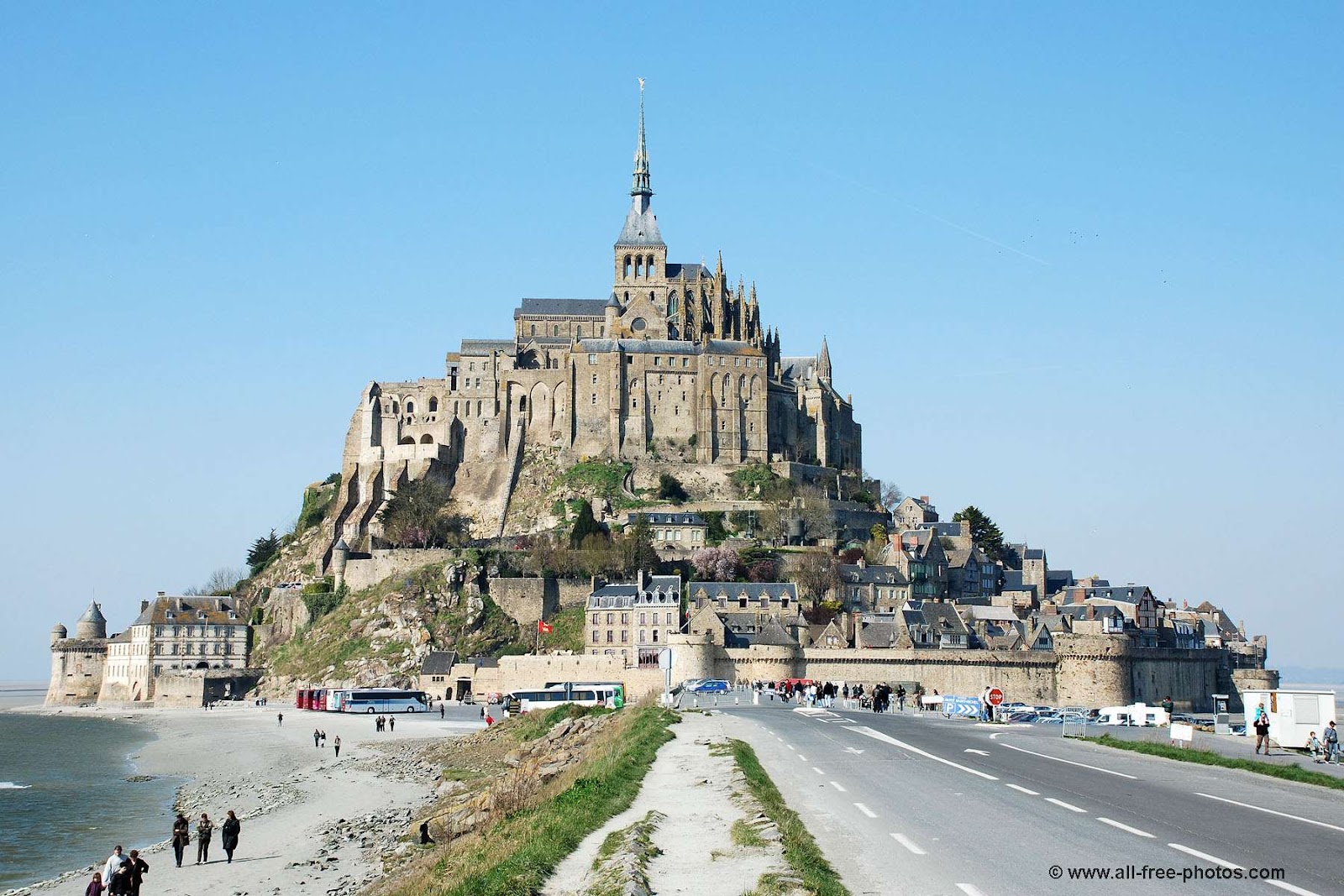
today is the town of Mont Saint Michel in France. This town currently consist of 44 people and is
located in the ocean on top of a rock, off the northern coast of France. The towns borders which
sit by the water used to be the homes, and shops, of the village. This town has stayed in grand condition
for such a long time due to the fact that people were only able to get to it when there was a low tide.
This city is now open and available 24/7 due to the fat they added a better road in 2013. The center
and the main part of the town is the cathedral which has been seen in many movies and has a huge
steeple as its statement piece. One great website that shows the details of the city/monument in
depth is located here. 


The abbey of Mont Saint Michel originated around the 1300s. The land had been settled
on in 966 by a group of Benedictine monks by the request of the Duke of Normandy, Richard
the first. The monastery was first built due to an order given to the monks from Saint Benedict.
The monastery was a place of great scripture and produced many manuscripts. This lead to the
nickname of the city, “City of the books”. The addition of manuscript also lead to the idea
of learning. Which then lead to pilgrimage. People from knights, to the kings of France,
and England all came to this city and cathedral to see it in its glory. The abbey is still standing
but has withheld lots of damage. One example is that part of it was burnt which was done
when King Phillip II tried to capture the mount. The church was also a state prison back in the
1800’s under the power of Napoleon I. All in all Mont Saint Michel has lived through a lot of
history and is still today a great artifact/reminiscence of medieval towns.

Works Cited:
“History of the Monument.” Centre Des Monuments Nationaux, http://www.abbaye-mont-saint-michel.fr/en/Explore/L-histoire-de-l-abbaye-du-Mont-Saint-Michel. Accessed 14 Oct. 2019.

Martin. “Discover the Mont Saint-Michel in Normandy.” French Moments, 10 Feb. 2017, https://frenchmoments.eu/mont-saint-michel/.]Accessed 14 Oct. 2019.


Britannica, The Editors of Encyclopaedia. “Mont-Saint-Michel.” Encyclopædia Britannica, Encyclopædia Britannica, Inc., https://www.britannica.com/place/Mont-Saint-Michel. Accessed 14 Oct. 2019.

“Top 25 Medieval Cities In Europe: Best Preserved Towns To Visit.” BigBoyTravel.com, https://www.bigboytravel.com/europe/topmedievalcities/. Accessed 14 Oct. 2019.

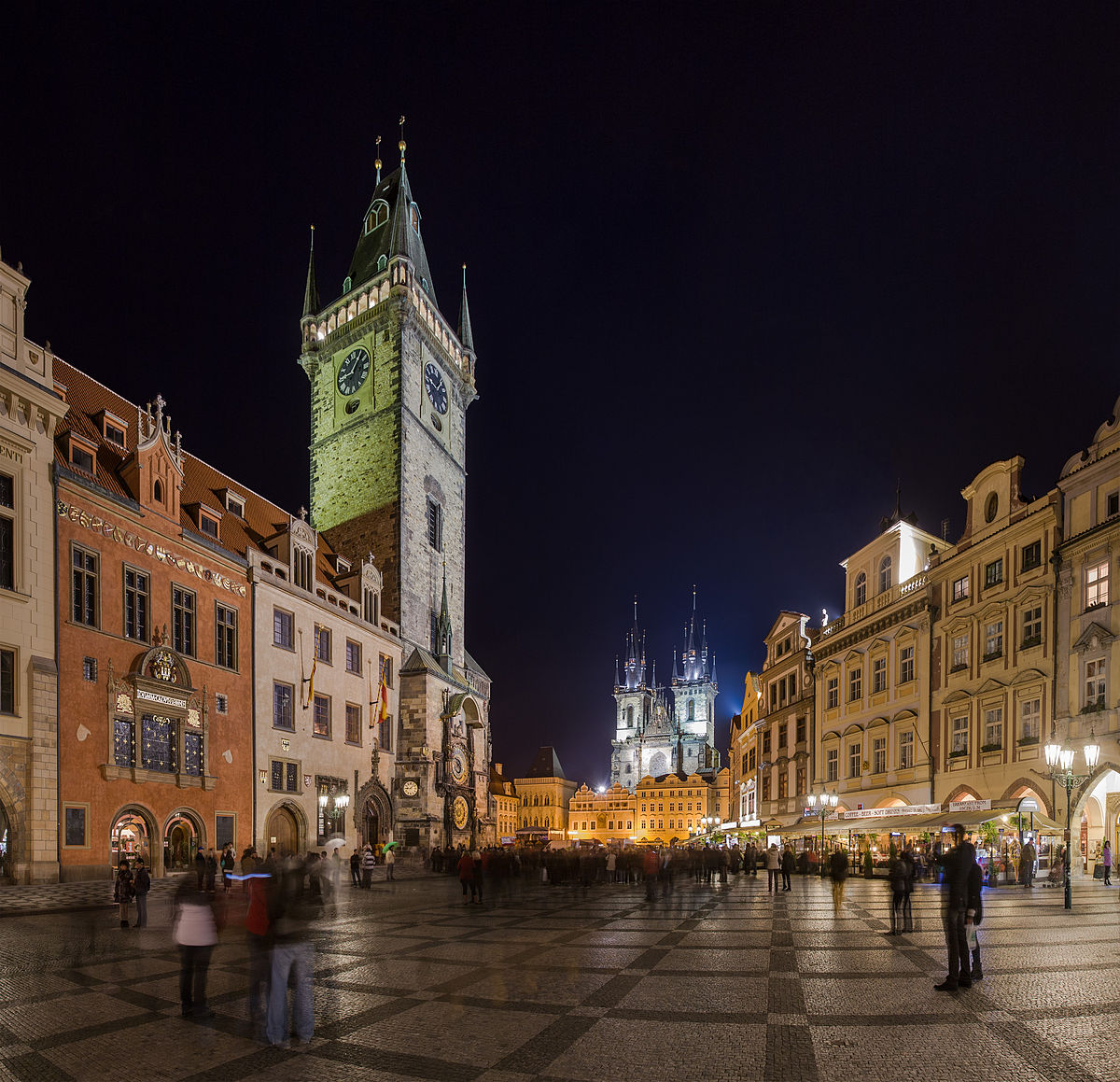
The Old Town Square / Prague, Czech Republic


The Old Town Square / Prague, Czech Republic


The city of Prague has been around since the 7th century.  This city is a treasure trove of medieval buildings. From the St Vitus Cathedral to the Old Town Square, you can see the medieval aspects all around you. As it is playing an important role in today’s history, it played an equally important role in the Middle Ages. In the Middle Ages, Prague was an important trading center. Due to the Vltava River connecting to the Elbe River, this no doubt helped with trading. The Old Town Square is a perfect example of trade in Prague. Built in the 12th century, the square was originally used as a place where people could buy and sell goods. This allowed the people of Prague access to important supplies and materials.


The Old Town Square hosted many buyers and sellers in the Middle Ages. Due to the commerce on the square, many of the main medieval buildings are on or near the square. For example, The Church of Our Lady before Týn is located on the square. Though this building was constructed in the 14th century, there was a church on this site in the 11th century. The 11th century church was most likely used as a hospital church for foreign merchants. Due to this, it is not surprising that the square was built a century later. Overall, Prague is a place of immense history of trade. From the Old Town Square to The Church of Our Lady before Týn, Prague is truly a page out of a history book.

Sources

Forrest. “Church of Our Lady before Týn (Chrám Matky Boží Před Týnem).” Prague.eu,  https://www.prague.eu/en/object/places/76/church-of-our-lady-before-tyn-chram-matky-bozi-pred-tynem.

“Old Town Square.” Old Town Square in Prague - Prague Experience,  https://www.pragueexperience.com/places.asp?PlaceID=594.

“Prague History.” Brief History of Prague, Czech Republic |Prague.com,  https://www.prague.com/v/history/.

Medieval University

Medieval University

Italy, 1400

Italy, 1400

900s, Jewelled crown

900s, Jewelled crown