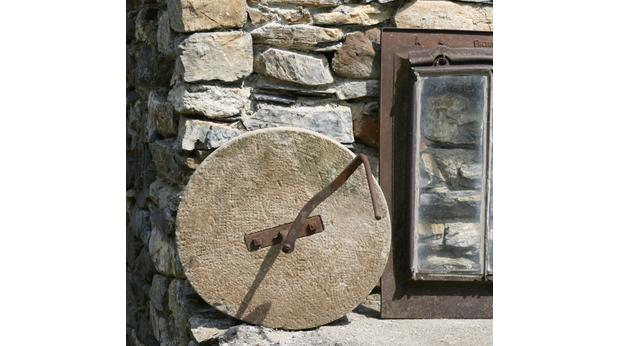
The Grindstone


The grindstone is, although a somewhat simple invention, an important advancement made during
the Middle Ages. A grindstone is a round slab of stone, about a meter in diameter and varying in
width, made of either sandstone, granite, or any hard stone. It is used to sharpen tools such as knives
by turning the stone with the handle or two-handles on the sides and water dripping on it. The water
on the stone helps prevent the stone from overheating as it grinds on the object. Depending on the
design of the grindstone, it would take one or two people to turn the stone, while another person holds
the tool that is being sharpened.

Even though the grindstone was invented around the early 1300s, it has actually been used for quite a long time. The design and use of the grindstone have evolved since its original design. For example, a foot pump allowing one person to not only turn the grindstone but also hold the tool was one of the few additions made to the original grindstone. This design was even used through the late 19th and early 20th centuries. Although the grindstone may seem like a simple invention, its use has been seen from the early 1300s, when it was first introduced, to the early 1900s and beyond.

Sources
“Collections.” Greater West Bloomfield Historical Society,     
https://www.gwbhs.org/grinding-wheel/.

“A History of the World - Object: Grindstone.” BBC, BBC,
http://www.bbc.co.uk/ahistoryoftheworld/objects/gczgWhKjRQSaGbNayttb5w.

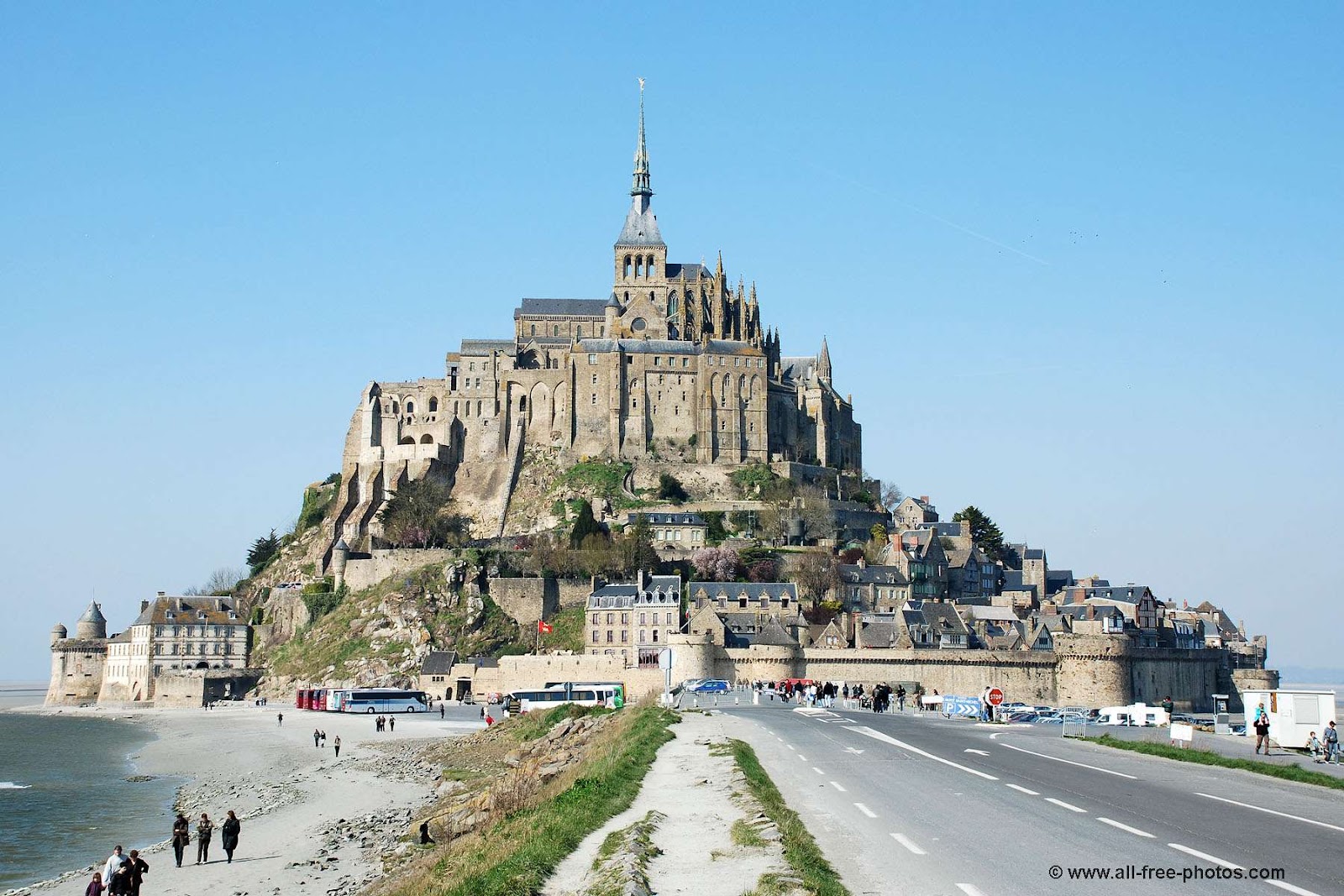
Mont Saint Michel, and Its Beautiful Cathedral

Mont Saint Michel, France: 

During the medieval ages architecture was a major component. Today people use architecture in
order to track back history and see the ways in which people lived. One artifact that is still around
today is the town of Mont Saint Michel in France. This town currently consist of 44 people and is
located in the ocean on top of a rock, off the northern coast of France. The towns borders which
sit by the water used to be the homes, and shops, of the village. This town has stayed in grand condition
for such a long time due to the fact that people were only able to get to it when there was a low tide.
This city is now open and available 24/7 due to the fat they added a better road in 2013. The center
and the main part of the town is the cathedral which has been seen in many movies and has a huge
steeple as its statement piece. One great website that shows the details of the city/monument in
depth is located here. 


The abbey of Mont Saint Michel originated around the 1300s. The land had been settled
on in 966 by a group of Benedictine monks by the request of the Duke of Normandy, Richard
the first. The monastery was first built due to an order given to the monks from Saint Benedict.
The monastery was a place of great scripture and produced many manuscripts. This lead to the
nickname of the city, “City of the books”. The addition of manuscript also lead to the idea
of learning. Which then lead to pilgrimage. People from knights, to the kings of France,
and England all came to this city and cathedral to see it in its glory. The abbey is still standing
but has withheld lots of damage. One example is that part of it was burnt which was done
when King Phillip II tried to capture the mount. The church was also a state prison back in the
1800’s under the power of Napoleon I. All in all Mont Saint Michel has lived through a lot of
history and is still today a great artifact/reminiscence of medieval towns.

Works Cited:
“History of the Monument.” Centre Des Monuments Nationaux, http://www.abbaye-mont-saint-michel.fr/en/Explore/L-histoire-de-l-abbaye-du-Mont-Saint-Michel. Accessed 14 Oct. 2019.

Martin. “Discover the Mont Saint-Michel in Normandy.” French Moments, 10 Feb. 2017, https://frenchmoments.eu/mont-saint-michel/.]Accessed 14 Oct. 2019.


Britannica, The Editors of Encyclopaedia. “Mont-Saint-Michel.” Encyclopædia Britannica, Encyclopædia Britannica, Inc., https://www.britannica.com/place/Mont-Saint-Michel. Accessed 14 Oct. 2019.

“Top 25 Medieval Cities In Europe: Best Preserved Towns To Visit.” BigBoyTravel.com, https://www.bigboytravel.com/europe/topmedievalcities/. Accessed 14 Oct. 2019.

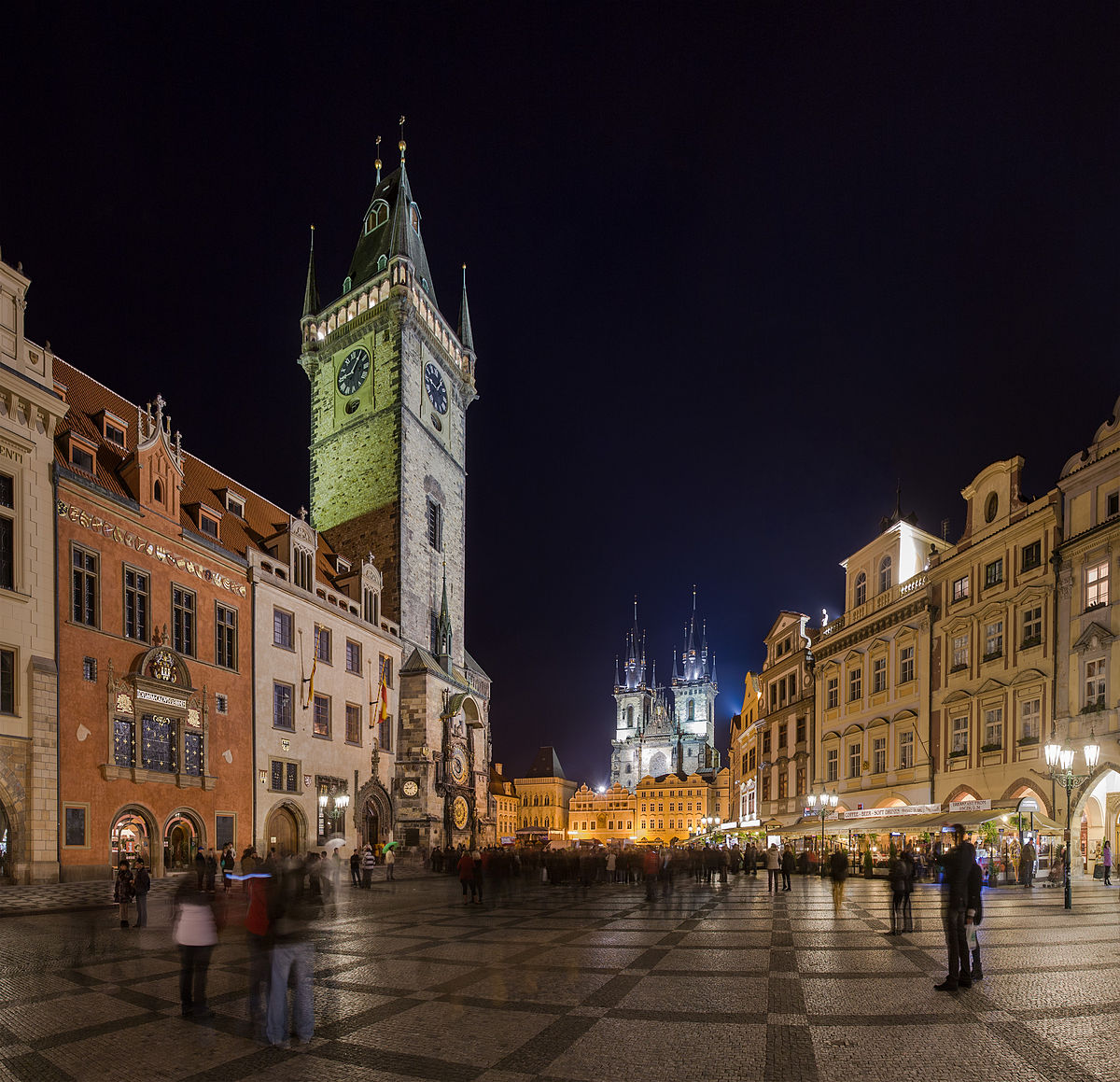
The Old Town Square / Prague, Czech Republic


The Old Town Square / Prague, Czech Republic


The city of Prague has been around since the 7th century.  This city is a treasure trove of medieval buildings. From the St Vitus Cathedral to the Old Town Square, you can see the medieval aspects all around you. As it is playing an important role in today’s history, it played an equally important role in the Middle Ages. In the Middle Ages, Prague was an important trading center. Due to the Vltava River connecting to the Elbe River, this no doubt helped with trading. The Old Town Square is a perfect example of trade in Prague. Built in the 12th century, the square was originally used as a place where people could buy and sell goods. This allowed the people of Prague access to important supplies and materials.


The Old Town Square hosted many buyers and sellers in the Middle Ages. Due to the commerce on the square, many of the main medieval buildings are on or near the square. For example, The Church of Our Lady before Týn is located on the square. Though this building was constructed in the 14th century, there was a church on this site in the 11th century. The 11th century church was most likely used as a hospital church for foreign merchants. Due to this, it is not surprising that the square was built a century later. Overall, Prague is a place of immense history of trade. From the Old Town Square to The Church of Our Lady before Týn, Prague is truly a page out of a history book.

Sources

Forrest. “Church of Our Lady before Týn (Chrám Matky Boží Před Týnem).” Prague.eu,  https://www.prague.eu/en/object/places/76/church-of-our-lady-before-tyn-chram-matky-bozi-pred-tynem.

“Old Town Square.” Old Town Square in Prague - Prague Experience,  https://www.pragueexperience.com/places.asp?PlaceID=594.

“Prague History.” Brief History of Prague, Czech Republic |Prague.com,  https://www.prague.com/v/history/.

Medieval City: Rothenberg ob der Tauber


Image result for rothenburg ob der tauber from afar

Rothenberg ob der Tauber: The German Medieval City

Rothenberg ob der Tauber is a little bit of the Middle Ages resting near central Germany. The town overlooks the Tauber River, giving its name which translates to "Red fortress above the Tauber" in German. During the Middle Ages, Rothenburg was the second biggest city in German, with a population of 6,000 within the city walls. While that might not seem like a lot, it was during medieval times. The town's historic center is surrounded by a 1.5-mile wall as well towers built in the 13th century that helps to add to its medieval feel.
Although the town has experienced many threats such as the 30 Year War and the Second World War, it still remains a well preserved medieval city. There are many landmarks within the town that allow visits to get a glimpse into what it was like to live within a medieval city. Some of these landmarks include the Franziskaner Monastery (13th Century) and the Holy Ghost Hospital (14th Century), both of these landmarks historically played a role in the expansion of the city. One of the most popular landmarks in Rothenberg is Plonlein or the "Little Square", which is known for its beautiful architecture and historical influences. Overall, this medieval town allows the world to see what cities in the Middle Ages looked like while also introducing visits to a slice of beauty.

Film Review: Monty Python and the Holy Grail

Comedy is a genre that can be very hit-or-miss. Many times, we see comedies that are bland, needlessly offensive, and often go forgotten fairly quickly. But every blue moon, the comedy gods deliver unto us a timeless gem. A film that transcends generations, cultures, and even galaxies. Monty Python and the Holy Grail (Python (Monty) Pictures, 1975) probably won’t be transcending any galaxies any time soon, but it certainly checks all of the other boxes.


This amazing classic from the geniuses in the Monty Python team follows King Arthur and his group of honorable knights of the Round Table: Sir Bedevere, Sir Lancelot the Brave, Sir Gallahad the Pure, and Sir Robin, the Not-quite-so-brave-as-sir-Lancelot, who had nearly fought the Dragon of Angnor, who had nearly stood up to the vicious Chicken of Bristol, and who had personally wet himself at the Battle of Badon Hill. And of course, who could forget the aptly named Sir Not-appearing-in-this-film. King Arthur and his band of honorable knights journey together on a mission from God to find the legendary Holy Grail. Along the way, Arthur and his knights must fend off horrible threats, like the Killer Rabbit, the Knights Who Say “Ni,” and of course, the terrible Frenchmen, who taunt them throughout their perilous journey.

Okay, back to reality. This film is a constant onslaught of comedy, quotable moments, and absolute absurdity. Within the first minute of the film, we’re greeted with a form of deceptive comedy, which tries to convince the viewer they’ve left their closed captions enabled-- but in a foreign language. Quickly thereafter, however, the fake captions begin to break down into a story about a moose, before the film announces “We apologize for the fault in the subtitles. Those responsible have been sacked.” It doesn’t end there, however. As the opening credits continue, the subtitles-- and even the credits themselves --break down even further, eventually resulting in the remainder of the credits needing to be completely redone “at great expense and at the last minute.” At this point, I highly recommend that viewers sensitive to flashing lights look away for a bit, as the remaining credits are accompanied by a red and yellow flashing background.

The humor at the beginning of the film is just a taste of what the film has in store for the next hour and a half. What makes this humor so unique, however, is just how timeless it is. You need not understand anything that was happening in England in the 1970s to understand the comedy of this film, nor do you particularly need any knowledge at all of the middle ages. This is a movie that everyone in the family can enjoy, without any historical context. Er, well, most in the family, as the film does contain some fairly vulgar sections, particularly when following Gallahan.

The film also has quite a few [mostly] accurate references to medieval times, such as the loyalty and honor associated with knighthood, King Arthur’s reverence to God, and a handful of references to plagues and unfair witch hunting. The film also includes many examples of fairly historically accurate armor and weaponry, and even paints a fairly accurate picture of life within castle walls. There are, of course, quite a few absurd themes and images the film presents. For example, the “horses” have been replaced by coconuts, and the Frenchmen are throwing cows over the castle walls to fend off the English. The authors were, however, careful to make these absurdities stand out enough where anyone could reasonably separate the real history from the jokes.

If you haven’t seen Monty Python and the Holy Grail, you absolutely need to watch it some time. I highly recommend gathering some friends and setting aside 2 hours to make it through this movie-- potentially longer. If you don’t pause to laugh at a joke, you’ll miss the next one. Monty Python and Holy Grail is available to rent from iTunes and Amazon Prime, available to buy from YouTube and Google Play, and is available to watch for Netflix and Philo subscribers.

The Wonderful Tale of Monty Python and The Holy Grail

     Monty Python and The Holy Grail is one the the British comedy troupes best known production. Under the countless layers of absurdity there is a surprisingly accurate historical story and environment. Along this journey this British comedy gang goes through many trials and tribulations to find the holy grail. While this movie may not be the best for teaching someone about the culture of the Middle Ages, it is a good tool for instilling an interest in the area. 
     There are more examples of a double edged sword of comedy fighting with reality. One of the first jokes that appears to be outrageously fictional is the interaction with the ever persistent black knight. Medieval combat was quick and brutal. King Arthur even prays asking for forgiveness. A good example of combat and the role of Christianity in knighthood.
The taunting Frenchmen. While there would be no Frenchmen in Britain during this time, this scene does excel at showing the impenetrable nature of castles without having a sizable army.     


The look of the film is quite pleasing both in appearance and accuracy. A major detractor from this being the very distinct lack of horses, something that is critical to the idea of the knight. However, from the Armour and heraldry to the structures and filth of the villages. The Armour has the appearances of historical armor belonging to the higher class of knights. One knight in particular even had issues keeping his visor out of his eyes.


My main issue with this particular movie is how difficult it is to extract proper history from the midst of the jokes. A viewer who is not already acquainted with the middle ages would struggle to determine what is outright fiction, and to even begin to believe that any of this movie is based in reality at all. Although, having watched The Holy Grail in the past, I now have a greater appreciation for the film. Through seeing how its based in reality I can see what inspired it, almost like being let into an inside joke. I would recommend anyone in this class or reader of the blog to give this movie a second watch… or a thirty-second; and for first time viewers not to worry about catching all the jokes, just enjoy.

And if you have no interest in watching Monty Python and The Holy Grail then well...

Medieval University

Medieval University

Italy, 1400

Italy, 1400

900s, Jewelled crown

900s, Jewelled crown