The Return of Martin Guerre: Love and Agency in 16th Century France


In 1548 Martin Guerre, a disgruntled, well-off peasant in the rural reaches of Languedoc, France, fled his village of Artigat, leaving his wife, son, and property behind without a trace. Eight years later, Guerre suddenly returns a new man -- loving, charismatic, and vigorous. Bertrande de Rols, once the subject of Guerre's frequent scorn and disregard, finds herself in marital bliss as her recently-returned husband treats her with previously unfounded respect and dignity -- though not all is how it seems. Three years after his return, a rumor begins to spread: Martin Guerre is an impostor. Championed by his uncle Pierre, these rumors claim that Arnaud du Tihl, also known as Pansette, stole the identity of the real Martin Guerre. High jinks ensue, ultimately leading a climactic trial during which the real Martin Guerre, now missing a leg from the Hundred Years' War, arrives to reclaim his name. Oddly enough, this film is based on the legal records of Jean de Coras, a member of the Toulouse Parliament and judge on Guerre's historical case.

Daniel Vigne's Le Retour de Martin Guerre (1982) is a suspenseful film rooted in the daily life of society's most forgotten people: the peasants. The film features neither a grandiose battle of heroic chivalry nor a classic tale of good versus evil; instead, it's an intimate showing of love and identity in the Middle Ages. Much to the film's credit, production overseen by acclaimed historian Natalie Zemon Davis who ensured, at the very least, the semblance of historical accuracy. Davis left the film unsatisfied with Vigne's dedication to history, writing The Return of Martin Guerre as proper analysis of the legal records, though her influence was not wholly lost on the film. 

Peasant Wedding (1567)
The film begins in a modest church of stone, lit only by candlelight, and lacking the comfort of pews. In the church commences the marriage of Martin and Bertrande -- a rather solemn ceremony marked by its presumably arranged nature, evidenced by the age of the bride and groom (around 14) and the extensive dowry cited after the marriage. Bertrande's dowry included money, a vineyard, a bed with a linen cloth and feathered pillows, and other such valuables -- each evidence of a society with a pseudo-middle class, even in rural areas, and not one of absolute poverty for those not of noble birth. After the ceremony, a celebration, quite similar to Pieter Bruegel's Peasant Wedding, began. Men clad in coifs and women in headdresses enjoyed the festivals of marriage: drinking, playing, and eating together in the home of the Guerre patriarch. Here begins one of the great discrepancy with history found in Martin Guerre, the omission of the Basque culture. Martin and his family immigrated to Artigat from the Basque County between France and Spain -- a land with unique social customs sacrificed in the film. One such custom, which was included in the film, involves the eldest male, the only heir under the Basque tradition, and his wife living in the same home as his father. While the inclusion of such a detail is great, the failure to contextualize the custom ignores the nuances of culture and muddles historical truth, as the Basque tradition now appears standard. 

One of the film's more striking sequences features a balance of pagan and Christian culture. Martin and Bertrande, bewitched by Martin's impotence, become the subjects of humiliation after their failure to consummate the marriage. Witchcraft is believed to be the source of their troubles, as Bertrande believes a sorceress jealous of the Guerre and Rols alliance to be behind the plot of their social demise. Seeking a cure, the couple tries various methods, with the most absurd being the pagan charivari. Dressed in the pelt of a bear, Martin is chased through the village by men clad in pine and women's clothes, beating sticks, ringing bells, and flailing tools. It is a humiliating ordeal, only furthered by Martin's capture in which the bear's false testicles are removed in a symbol jab at Martin's impotence. This spectacle is rooted in pagan tradition as a means to scare off evil spirits from newlyweds by using rough or loud noises, and though it may not have succeeded, the charivari demonstrates the more amusing aspects of medieval life often forgotten by the public. 

In addition to the charivari, Martin and Bertrande meet with a village elder to seek a cure. The tradition of consulting a local wise woman was prevalent in the region of Artigat, and although she did not cure the couple, she instructed that four masses must be held to help consummate the marriage. Shortly thereafter, Bertrande was pregnant, though not without a long journey through regional, pagan, and Christian traditions. With the help of Davis, Vigne guides the audience through a culture not entirely under a Christian hegemony; rather, the audience is presented a nuanced society with variant foundations. 

Le Retour de Martin Guerre trades the sprawling battlefields of historical epics for the intimate confines of the medieval village. Under the guidance of Davis, the film features an accurate representation of daily life. The village center is bustling with simple trade as children play in the streets; peasant laborers of all ages and genders toil in the fields, swinging fails and tilling the fields with plows; and life is marked by familial obligations and lineage. Despite all the traits of an authentic medieval society, Martin Guerre diverges from traditional storytelling, presenting Arnaud and Bertrande as co-conspirators. Although ambiguous in the film, the idea of Bertrande being complicit in Arnaud's identity theft was proposed by Davis herself, citing the rising tide of Protestantism in rural France -- a detail omitted in the film -- as support. The film's lack of Protestant themes is ultimately a hindrance, as it removes a fundamental principle by which many of the characters historically operated. 

While not without its issues, Le Retour de Martin Guerre is a well-crafted journey into the nuanced identity of a medieval peasant. If you enjoy tales of suspense, love, and courtroom drama, this is an enjoyable film which proves that the truth can be stranger than fiction.

Works Cited:
Davis, Natalie Zemon. The Return of Martin Guerre. Harvard University Press, 1983.
Vigne, Daniel, director. Le Retour de Martin Guerre. European International, 1982.


The Seventh Seal: Disease, Religion, and Fear

Ingmar Bergman's The Seventh Seal is regarded as one of the most iconic movies of all time. Released in 1957, it is filmed in black-and-white and follows the story of Antonius Block, a Swedish Crusader who returns to Europe in the throes of the Great Plague. Death follows him - quite literally - and to keep his life, Block must win a chess match against him.


The Crusades ended decades before the plague hit Europe in 1347, concluding in the eleventh century. Block's role as a crusading knight ties together two well-known themes of the medieval period, providing an easily understandable storytelling method if one that is not entirely accurate.

Toward the beginning, two people have a conversation in a church. One is painting the walls and the other a commission of Block's squire, Jons. The artists talk about the wall painting and the effects of the plague on society. It is clear that the disease is causing shockwaves, and the artist reveals that he is painting the danse macabre, which becomes a crucial element as the story progresses.

All in all, the movie showed very little of the plague itself. Toward the end of the film, a plague victim stumbles toward the group, begging for water. Jons stops the mute girl from giving him any from their canteen, telling her again and again that "it's useless." The victim dies a few moments later, but not before screaming at them, "do I not deserve compassion?" This scene shows the plague as vicious, striking quickly and killing fast. Bennett quotes a chronicle from Siena as "father abandoned child; wife, husband... no one could be found to bury the dead for money or friendship." Bergman captures the terror of the plague much in the way that those who lived through it did.

Perhaps one of the most striking scenes is that of the flagellants and monks holding a procession through the town after a performance by the characters of the fools. Although flagellants existed as a response to the Black Death, they were frowned upon by most of society and were not condoned by the rest of the church. It was more common for the church to host processions of their officials and encourage citizens to pray and attend services more frequently. A priest delivers a message that frightens the crowd as well: they are all destined to die for the sins that brought about the plague. Belief that the disease was divine punishment from God was very real among common people and chroniclers alike.

The movie concludes with Death leading the characters in the danse macabre across the open hills as the fool and his family escape. Characters at the beginning painted the same scene on the walls of a castle, leaving the scene with the dual purpose of bringing the story full-circle and alluding to the infamous artistic motif of the late Middle Ages. The dance is part of memento mori; the mindset that everyone dies in the end. People in the Middle Ages were frightened of death but found solace in that they would be reunited with God once they passed. The characters themselves represent various figures in the danse - the fool, the knight, the maid, etc. In the end, Block was foolish to try and outsmart Death.

Much like the Middle Ages, the 1950s were a time of turmoil. Bergman created Seal barely a decade past the end of World War II when the world grappled with the effects and recovery. Block's monologues on his doubts about religion and his desperation to believe in God for fear of what will happen to him if he does not reflect less of the thirteenth century's memento mori and more of contemporary confliction in a war-torn era.

If you have spare time, I highly recommend The Seventh Seal. It holds fairly close to medieval customs and ideas about the Black Death and guards its title as a classic jealously. If you're less keen on the historical aspects, Bill and Ted's Bogus Journey delivers even more board games with Death (and fewer Swedish subtitles).

Works Cited

Bennett, Judith. Medieval Europe. New York, 2011.

Aberth, John. From the Brink of the Apocalypse. Routledge, 2001.

Strata Florida Abbey; The Valley of Flowers

In the rural part of Central Wales, near the small village of Pontrhydfendigaid (no clue on how to pronounce this) lies the ruins of an medieval church. In English the Abbey was known by the name "Strata Florida", in welsh it was called Ystrad Fflw or the Valley of Flowers. Despite its name a long history of violence marred this location and defiled the sacred purpose of the Abbey. Although it is unassuming at first glance the ruins of this Cistercian Abbey mark the spot where enormous changes and upheavals happened in British History not limited to the Glyndŵr rising and the chaos of the Protestant Reformation.


Strata Florida was founded by Cistercian Monks in the year 1164 CE, the Abbey's chapel was consecrated much later in the year 1204. The Cistercian Monks at Strata Florida eventually became quite wealthy and influential Ystrad Fflw had arguably become the cultural center of medieval Wales. Among the great works that were produced here were the Brut y Tywysogion (one of the first chronicles of Welsh History written in the Welsh Language) and the ballad of Mabinogion. One of the foremost poets of the middle ages, Dafydd ap Gwilym was known to have lived and compiled his works inside Strata Florida. Strata Florida was so important in the political and cultural spheres of Wales that the Welsh princes, including the famous Llywelyn the Great often held council there to decide the major political issues of the day.


Unfortunately the prosperity and influence of the Cistercian Monastery began to decline following the English conquest of Wales in 1277 CE. Perhaps this is representative of the decline of Welsh culture in general, the confiscation of Welsh lands under English nobles styled "Marcher-Lords" marks the beginning of the gradual Anglicization of Wales. This period marks the beginning of the troubles that the Cistercian Monks of Strata Florida faced during the tail-end of the Middle Ages.


                                                   A 16th century portrait of Henry IV

During the Welsh war of Independence the problems faced by the Abbey grew worse. In 1401 the English King Henry IV and his son lead an army in pillaging Strata Florida, after the monks there were found to be sympathetic to the Welsh rebel leader, Owain Glyndŵr. Following this incident the monks were expelled from the Abbey. Strata Florida was used as an English military base for the remainder of the war. In 1415 following English victory in the Glyndŵr rising the Abbey was returned to the Cistercian Order, though the monks would never truly recover from the devastation incurred upon them during the conflict.


                                                                        Henry VIII


The protestant reformation and the rise of Anglicanism in England would mark the final death of Strata Florida. In the 1540's Henry VIII the founder of Anglicanism assumed direct control over religion in England. As a consequence of this many monasteries including Strata Florida Abbey were plundered and destroyed by English Soldiers, often being converted into manor houses for use of the nobility.

                                                                         Sources: 

        http://www.bbc.co.uk/blogs/waleshistory/2012/07/strata_florida_abbey.html
        
        http://strataflorida.org.uk/

        https://www.historic-uk.com/HistoryUK/HistoryofWales/The-English-conquest-of-Wales/


Are You Worth Your Salt?


In Roman times, salt was highly prized and if one was said to be not "worth their salt," it was considered a high insult. It is also regarded as the first traded commodity (Salt Assocation). Salt was no less valuable in the Middle Ages and contributed to status as well as food preservation.


The mineral was not mined, but obtained through evaporating brine and seawater. Lead salt pans were used for this purpose but would be replaced with iron versions in the eighteenth century. Originally designed in the Roman era, salt pans of the Middle Ages were slightly smaller than the Classical standard and did not have any inscriptions or embellishment on them. Pans were left in the sun and would leave behind salt as the water evaporated. There was money to be made in salt production and "wiches" - saltworks - sprung up throughout England to get into the industry.


Domesday Book records of the salt industry in England are more in-depth than those of any other type of production, demonstrating just how valuable it was (Hull). Worcestershire and Cheshire were two of the largest saltworks cities, followed by Sussex on the southern coast. Middlewich, Nantwich, and Northwich were the major saltworks of Cheshire. Salt was a local affair and the cost of importing it to other cities was great. London later formed its Fraternity of Salters to produce it themselves as only the wealthy could afford it when brought in from other towns.

These saltworks received support from the king and in return were to pay shares of their product to him. Droitwich, a saltworks in Worcestershire, had 300 measures of salt paid to the king by three salt-workers according to the Domesday account. Henry II's marriage to Eleanor of Aquitaine also opened trade between England and France, providing a new market for Biscay salt from the Continent, although it probably did little to reduce the prices attached to it.


The famine that struck Europe in 1315 saw the amount of salt available to the population drop because of a reduced amount of sunlight. Intense rain decreased crop populations and blotted out the sun, making it difficult to dry out salt from seawater. As availability decreased, it made it harder to preserve meats which resulted in even greater food shortage.


Works Cited

"Lead Salt Pans." Salt Association. https://www.saltassociation.co.uk/education/salt-history/roman-times/lead-salt-pans/.

"Life in Towns and Villages." National Archives. http://www.nationalarchives.gov.uk/domesday/world-of-domesday/towns.htm.

Newman, Paul. Daily Life in the Middle Ages. McFarland and Company, 2001.

"Roman Times." Salt Association. https://www.saltassociation.co.uk/education/salt-history/roman-times/.

"Normans and Late Medieval." Salt Association. https://www.saltassociation.co.uk/education/salt-history/normans-late-medieval/.

"Salt-works." Hull Domesday Project. http://www.domesdaybook.net/domesday-book/structure-of-domesday-book/salt-works.

"Using Salt in the Middle Ages." Medievalists.net. http://www.medievalists.net/2016/01/using-salt-in-the-middle-ages/.


Architecture Tools

Many different tools were used in the building and architecture of the 12th century. A compass, not the navigational kind, is an instrument that is used to make a perfect circle. A compass is depicted in the manuscript illustration. In this manuscript illustration God as Architect, it depicts God holding the world and using a compass. It is believed that it was invented by Perdix, nephew of Daedalas who was a famous craftsman. The first version was attaching a string to a peg. It is believed that it was used by the Egyptians and was later seen in the Roman times as it was upgraded. In medieval times it was converted into a legged compass before it became more like the traditional one used today. Siena Cathedral is a great example of where it has been used, in making the large central mosaic, top of arches, and the dome.
Siena Cathedral

Vienna, Nationalbibliothek, God 13th century
The square was used to ensure that everything was at a right angle or 90 degrees. It was also used in measuring to make sure materials were the right size by all dimensions. With building higher and higher it needs to be measured to keep the building straight and from falling over from being unbalanced. The square first came about in the Egyptian times which is known because it was found in one of the royal tombs. Even later the Greeks and Roman were shown to have used this tool. This would later form the modern-day right triangle, even though squares are still used as well. In the Herrad von Landsberg, Horus Delicaram shows how the square is being used as the building is being built up.
Herrad von Landsberg, Hortus Deliciarum 12th century


Work Cited:
God as Architect/Builder/Geometer/Craftsman ( Österreichische Nationalbibliothek): Art in the Christian Tradition, diglib.library.vanderbilt.edu/act-imagelink.pl?RC=55539.
“Just Fun Facts.” Fun and Interesting Site, 1 July 1969, justfunfacts.com/interesting-facts-about-siena-cathedral/.
L. R. Shelby. “Medieval Masons' Tools. II. Compass and Square.” Jstor, 1965, www.jstor.org/stable/pdf/3101076.pdf?refreqid=excelsior%3Ae19cc2c4292061ca098dd0100454ff9f.
SCHOFIELD , JOHN. “The Construction of Medieval and Tudor Houses in London .” Arct, 1991, www.arct.cam.ac.uk/Downloads/chs/vol7/article1.pdf.


Castles Seen in Monty Python And The Holy Grail


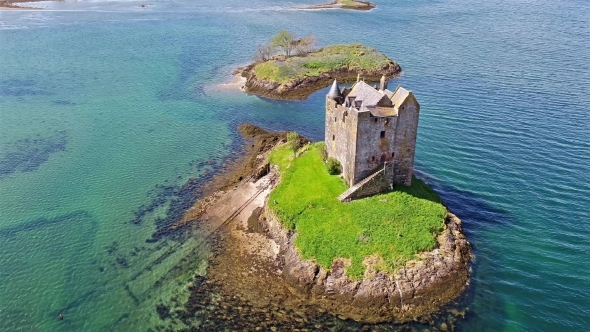
      In the film Monty Python and the Holy Grail we see many different castle locations that the knights visit in their journeys. However, only a couple castles were actually used in the filming of the movie. The two castles that were used were Doune Castle and Castle Stalker. Because of this they had to get a bit creative during filming to create the illusion of multiple locations. Most of the movie was shot in the highlands of Scotland.

Scotland-2016-Aerial-Doune Castle (and Castle keeper's cottage).jpg

     Pictured above is the Doune Castle. This Castle was originally built in the 13th century. Many of the scenes in the film that took place in a castle were shot at this location. For example the scene inside Camelot that portrayed the knights drinking and partying was done here. The use of tight shots was employed to maintain the illusion of various castle locations.

Image result for Castle StalkerThe other castle used was the Castle Stalker. This was only used in the final scene of the film, known as "The castle of Aaarrgghh." Castle Stalker, just like the rest of the film locations is located in Scotland. This Castle was originally built in 1320 as a small fort. Nowadays Castle Stalker is a great tour spot in Scotland.


Sources


Medieval University

Medieval University

Italy, 1400

Italy, 1400

900s, Jewelled crown

900s, Jewelled crown